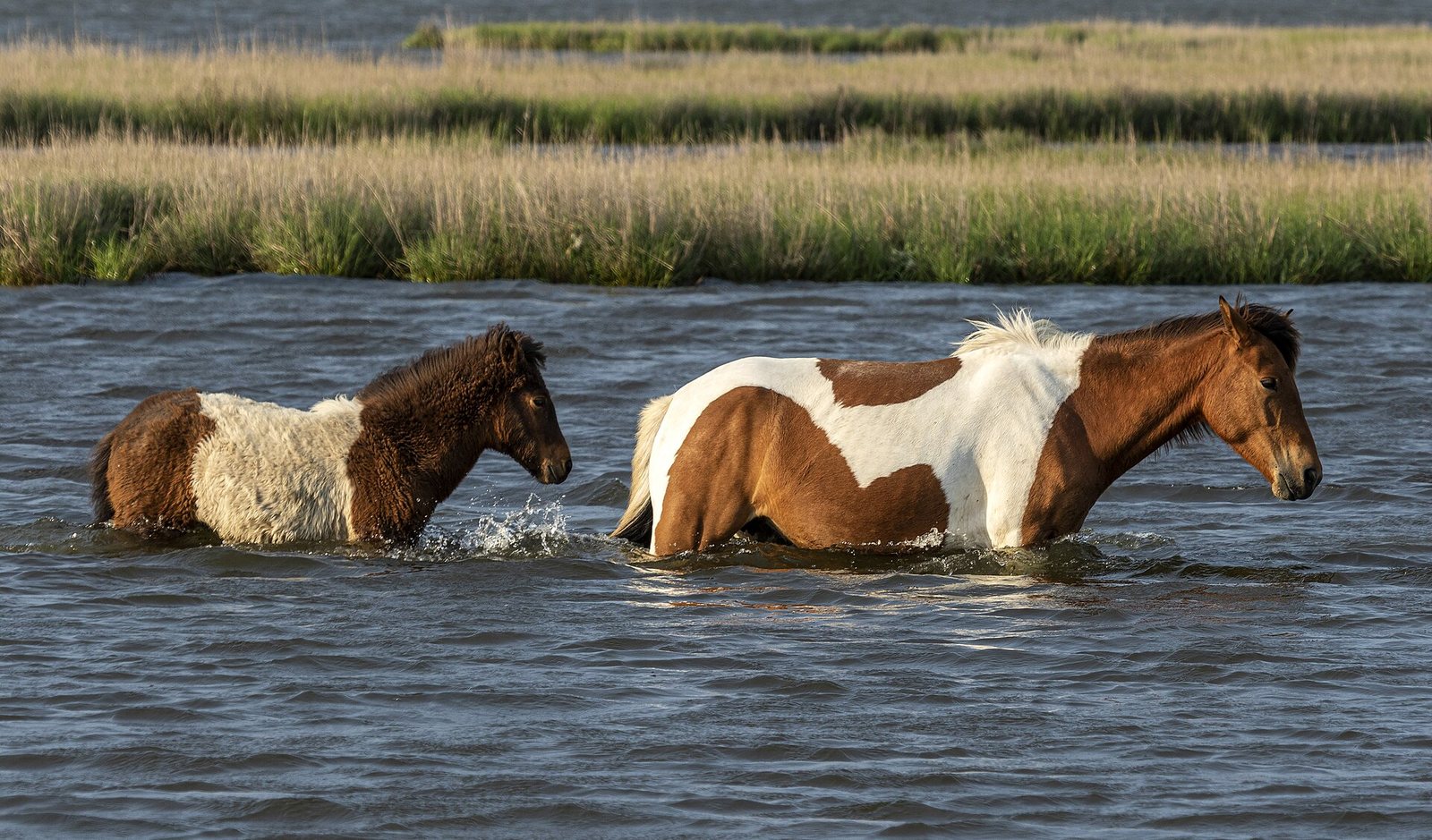
Cross the Verrazano Bridge from the Maryland mainland and the development simply stops. No hotels, no boardwalk, no condo towers: just Assateague Island, a 37-mile ribbon of sand, pine and salt marsh that runs south from the Ocean City Inlet into Virginia, with the Atlantic on one side, shallow bays on the other and, on the Maryland end, 83 wild horses (the Park Service’s March 2026 count) that go wherever they like. Sometimes that’s the beach. Sometimes it’s the middle of the road, or your campsite.
The short answer: Assateague is the best natural beach in Maryland and one of the few places in the East where you can camp behind the dunes and wake up to horses, and yes, it’s worth the trip. Entry costs $25 per vehicle for a week at the National Seashore, or $5 per person in summer at Assateague State Park. It’s 20 minutes from Ocean City and about three hours from Washington, Baltimore or Philadelphia. Come prepared for sun, wind and, from late spring into early fall, serious bugs.
Every fee, date and rule on this page was checked on September 23, 2026 against the operators’ and agencies’ own websites: the National Park Service, Maryland’s Department of Natural Resources and the US Fish and Wildlife Service. One thing trips up nearly every first-time visitor: Assateague is split between two states and three agencies, each with its own fees, dog rules and campgrounds, and no road connects the Maryland and Virginia ends. The table below sorts them out.
On this page: At a glance · Is it worth it? · Two parks, two states · The horses · Beaches · Camping · Things to do · Over-sand driving · Dogs · With kids · Bugs and best time · Safety · Chincoteague · Visitor centers · What to pack · Getting there · Assateague or Ocean City · Where to stay · A day plan · What to skip · FAQ
Assateague at a glance
| Question | Answer (checked September 2026) |
|---|---|
| What is it? | A 37-mile barrier island shared by Maryland and Virginia, managed by the National Park Service, Maryland DNR and the US Fish and Wildlife Service. |
| Maryland way in | Route 611 south from US 50 near West Ocean City, over the Verrazano Bridge. The visitor center is on the mainland side, open 9 a.m. to 4 p.m. daily. |
| Entry fees (2026) | National Seashore: $25 per vehicle for 7 days, $45 annual (both ends); lower rates for motorcycles and for visitors on foot or bike. State park: $5 per person from Memorial Day weekend to Labor Day, $5 per vehicle otherwise. |
| Hours | The Maryland district of the National Seashore is open 24 hours. |
| Horses | 83 in the Maryland herd in March 2026. Stay at least 40 feet away; never feed or touch. |
| Camping | National Seashore $40 a night; reservations required March 15 to November 15, up to six months ahead. State park $27.50, or $38.50 with electric. |
| Dogs | Allowed on a 6-foot leash in parts of the Maryland Seashore only. Banned from the whole Virginia end, even inside your car. |
| Drive times | About 20 minutes from Ocean City. About 2 hours 40 minutes to 3 hours 15 minutes from Washington; similar from Baltimore and Philadelphia, before traffic. |
| Crowds | 2,325,195 visits in 2025; 51% of Maryland-end visits came in June, July and August. |
| Best time | May and mid-September to October: warm enough, far fewer bugs and people. |
Is Assateague Island worth visiting?
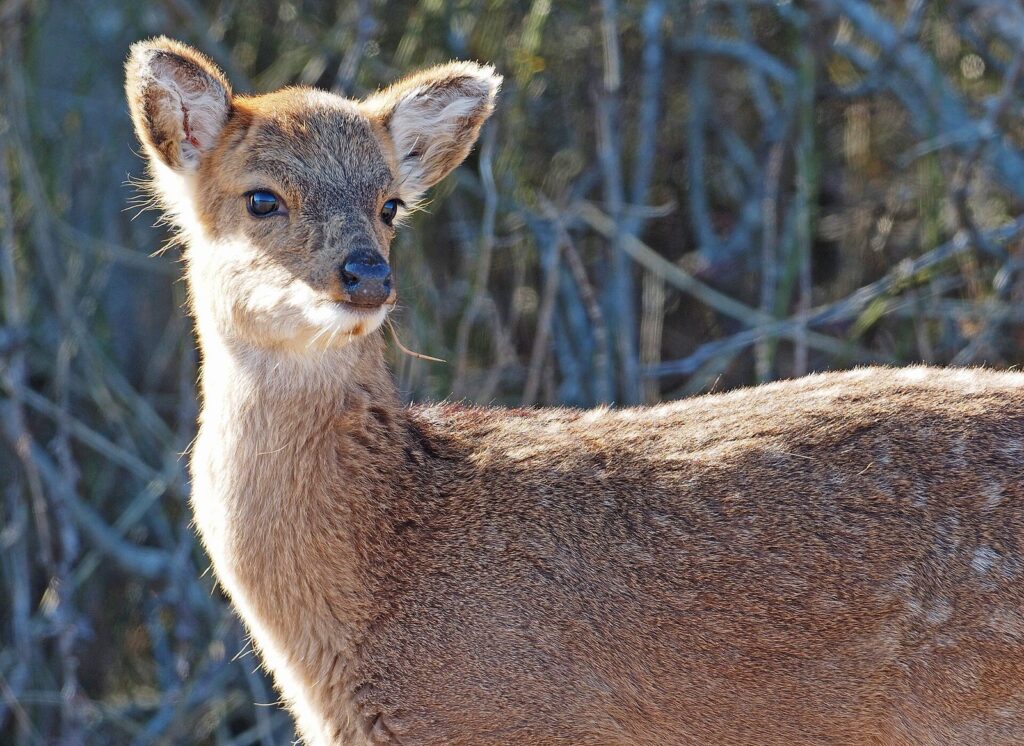
Yes, for almost anyone who likes the outdoors, and especially if you’re already at the beach in Ocean City. The contrast is the point. North of the Inlet you get 10 miles of hotels; south of it you get a barrier island much as the Atlantic left it, with dunes held together by grass, maritime forest of loblolly pine, bay marshes full of herons and egrets, ghost crabs on the beach at night and sika deer, a small Asian elk introduced to the Eastern Shore in the early 20th century, in the woods. The horses are the headline, and they deserve to be, but the beach is the reason people come back.
Where it disappoints is in comfort. There are no restaurants on the Maryland end, very little shade on the beach, cold showers at best in the National Seashore campgrounds, and insects that can make a July evening miserable. It’s a day at a wild beach or a night in a tent, not a resort stay. Treat it that way and it’s one of the best days out on the Eastern Shore.
Verdict: worth a day from Ocean City or Berlin, and worth a night or two of camping if you can handle wind, sand and bugs. In summer, go early in the day and bring more water, shade and repellent than you think you need.
Go if you want wild horses, an undeveloped beach, bay paddling, crabbing and night skies far darker than anything Ocean City’s glow allows.
Camp if you book the moment the six-month window opens, bring long sand stakes and a screened shelter, and store every scrap of food out of the horses’ reach.
Skip it if you need boardwalk food, beach-chair rentals and air conditioning within a short walk, or if you’re bringing a dog to the Virginia end. Ocean City handles the first; nothing fixes the second.
Two parks, two states: how Assateague is divided
Assateague confuses people because it’s one island run as three places. In Maryland, the National Park Service runs Assateague Island National Seashore, which covers most of the Maryland end, and Maryland DNR runs Assateague State Park, a smaller stretch of beach and campground right where the bridge lands. In Virginia, the US Fish and Wildlife Service runs Chincoteague National Wildlife Refuge, and the Park Service manages the recreational beach inside it. Each charges its own fees and sets its own rules, and passes don’t all cross over: a state park pass won’t get you into the National Seashore.
| National Seashore (Maryland) | Assateague State Park (Maryland) | Virginia end (Chincoteague NWR) | |
|---|---|---|---|
| Run by | National Park Service | Maryland DNR | US Fish and Wildlife Service, with the Park Service at the beach |
| Way in | Route 611 over the Verrazano Bridge, then south on Bayberry Drive | Route 611, at the end of the bridge | Through the town of Chincoteague, Virginia |
| Entry (2026) | $25 per vehicle, 7 days; $45 annual; lower rates on foot, bike or motorcycle | $5 per person Memorial Day weekend to Labor Day; $5 per vehicle otherwise | $10 a day, $25 a week, $45 a year per vehicle |
| Camping | Oceanside, Bayside, group, horse and backcountry sites | Large campground with electric sites and bathhouses | None on the island |
| Horses | The Maryland herd, 83 in March 2026, roaming free | The same herd wanders through | The Chincoteague ponies, owned by the local fire company, in fenced grazing areas |
| Dogs | 6-foot leash, permitted areas only | Day-use areas only, from Labor Day to the Friday before Memorial Day | Not allowed at all, even in your car |
| Over-sand driving | Permit required ($110, online only) | No | Separate Virginia rules |
Plan it: if you only have a day from Ocean City, stay in Maryland, where the bridge is 20 minutes from downtown. Pay the National Seashore’s $25 if you want the horses, the nature trails and the quieter beach, and the state park’s per-person fee if you want its guarded beach and bathhouses. Save Virginia for its own trip.
The wild horses: where to see them and the 40-foot rule
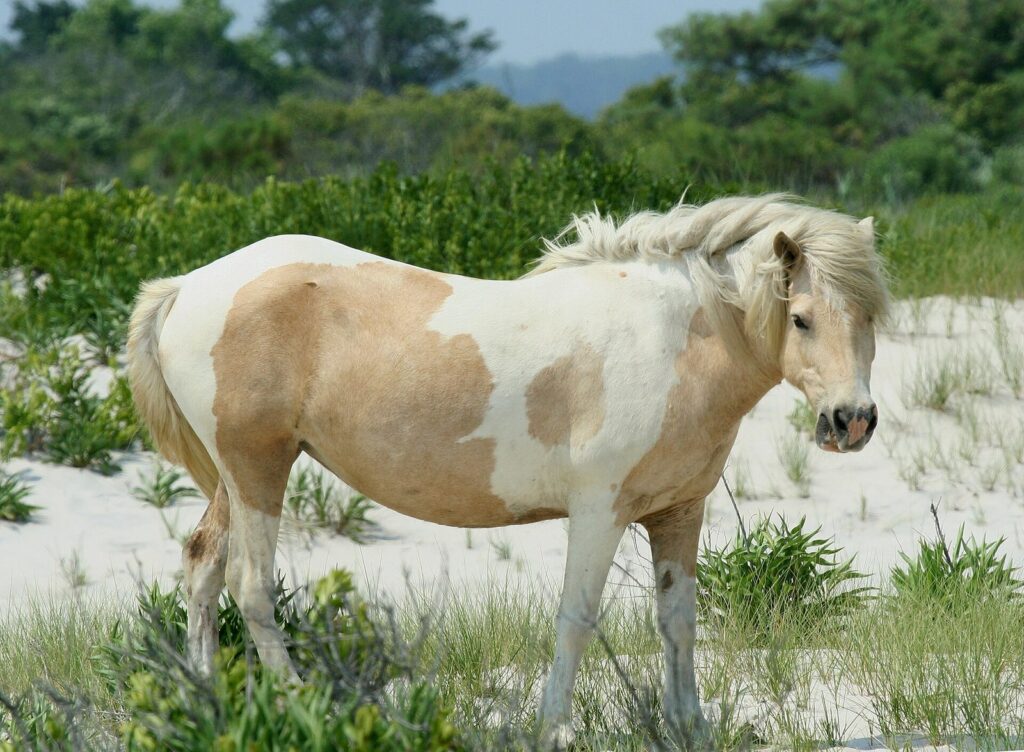
The Maryland herd counted 83 horses in March 2026, 34 stallions and 49 mares, and the Park Service manages it toward a target of 80 to 100 with a long-running fertility-control program rather than roundups. They’re believed to descend from domestic horses that 17th-century settlers turned loose on the island to avoid fencing laws and taxes; the shipwrecked Spanish galleon story is the more romantic legend. Either way, these are wild animals now, living on marsh grass, dune plants and not much fresh water, which is why they look round-bellied: they drink a lot, and the salt makes them bloated.
The rules, and why they exist
Stay at least 40 feet away, about the length of a bus. That’s the legal minimum, and the Park Service is clear that it may still be too close if a horse is agitated or a stallion is guarding mares. Never feed, touch or pose next to them. Assateague’s horses bite and kick, and people get hurt trying for a closer photo. Feeding does lasting damage, too: horses that learn people mean food start approaching cars and campsites and get more aggressive over time, and the park has had to remove food-conditioned horses from the herd. Feeding or touching them is against park regulations and can bring a fine.
Where they turn up
Anywhere. The herd has no fixed range on the Maryland end, and the Park Service moves horses away from busy beaches, roads and campsites when it can. That said, you’ll most often see them:
- Along the park roads, grazing the verges of Bayberry Drive and the roads to the campgrounds. Don’t stop in the travel lane: pull fully into a parking area, because the car behind you is also looking at the horse, not the road.
- In the marshes near the bridge, on both sides of the road as you arrive, where they wade the channels for the grass.
- On the beach on hot, still days, when the breeze off the ocean gives them a break from the biting insects. This is where the famous horses-on-the-sand photos come from, and where people most often get too close.
- In the campgrounds, where they will open unlatched coolers, tear into bags and eat anything left on a table.
How to see them without being the problem
Drive slowly, look early in the morning and in the evening, and use binoculars or a long lens rather than your feet. If a horse walks toward you, move away. At a campsite, keep food, coolers and trash in a closed vehicle or a hard-sided container that latches, and never leave food out while you walk to the beach. If you see someone harassing the horses, tell a ranger rather than stepping in yourself.
Photographing the horses
The best horse pictures on Assateague are taken from a long way off. A telephoto lens lets you fill the frame from well beyond 40 feet, and the low light of early morning and evening does more for a photo than getting closer ever will. Shoot from a pullout or a parking area, not from the travel lane, and never use food, whistles or clapping to make a horse look up. Leave the drone at home, too: launching or landing one is prohibited in national parks, and the horses and nesting birds are exactly why.
Plan it: for the best odds, drive the Maryland park roads slowly within an hour or two of sunrise or sunset, then walk the beach near the day-use areas on a hot afternoon. Seeing a horse isn’t guaranteed, but on most days it’s likely.
Beaches, swimming and lifeguards
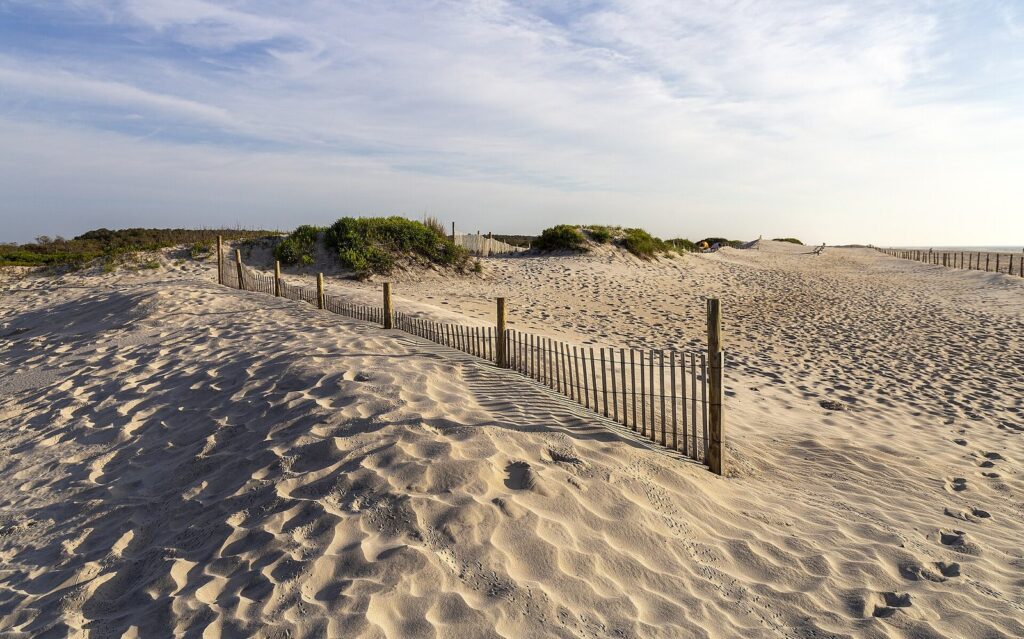
The Atlantic beach runs the length of the island, and the Park Service counts all 37 miles as open for hiking. On the Maryland end, the busiest stretches sit by the day-use parking areas in the state park and the National Seashore, where both run lifeguarded beaches in summer. Walk 10 minutes north or south and the crowd drops away; walk 30 and you may have a mile to yourself. The sand is wide, the dunes are fenced to keep people off the grass that holds them together, and there’s nothing built on the beach at all.
A beach that moves
Assateague is a barrier island, and barrier islands don’t sit still. Storms push sand over the island from the ocean side toward the bay, the kind of overwash that closed the over-sand vehicle zone in September 2026, and over thousands of years the whole island has been rolling slowly toward the mainland. People sped part of that up. The 1933 hurricane cut the Ocean City Inlet, and the jetties built to keep it open interrupted the sand that used to drift south along the beach. Assateague’s northern end, starved of that sand, has shifted west toward the mainland, and the Army Corps of Engineers and the Park Service move sand back onto it to slow the loss. For visitors, it means the beach, the dunes and even the parking areas can look different from one year to the next.
Swimming
Swimming is allowed, but the Park Service is blunt that it’s at your own risk. Swim near a lifeguard in summer, and don’t swim at all when no guards are posted unless you know surf. The hazards are the same as at Ocean City, without the lifeguard stand every block: rip currents, which you escape by floating and swimming parallel to shore, and shorebreak, which drives swimmers into hard sand. The bay side is shallow and calm for wading and paddling, but it’s marshy, muddy in places and no substitute for an ocean swim.
What to bring
Assume there’s nothing to buy. Pack water (a lot of it), food in a latching cooler, sunscreen, a sun shelter that can handle wind, and insect repellent even on a beach day, because an offshore breeze can bring biting flies out of the marsh within minutes. You may collect shells, but the limit is a gallon or less of unoccupied ones, so leave anything still living where it is.
Can you camp on Assateague Island? Campgrounds compared
Yes, and it’s the best way to see the place: the horses wander through at dawn, the stars come out properly at night, and the sound of the surf is the only traffic. There are two sets of campgrounds, both in Maryland. The Virginia end has none.
| Campground | What you get | 2026 price | Season and booking |
|---|---|---|---|
| National Seashore: Oceanside drive-in | Tents, trailers and RVs, no hookups; picnic table and fire ring; behind the dunes | $40 a night | Reservations required March 15 to November 15. In winter, Loop 1 closes and Loop 2 is first come, first served |
| National Seashore: Oceanside walk-in | Tent-only sites 100 to 200 feet from central parking | $40 a night | Closed November 16 to March 14 |
| National Seashore: Bayside drive-in | Tents, trailers and RVs, no hookups; grills; a generator-free zone in the B loop | $40 a night | Open year-round; reservable up to six months ahead |
| National Seashore: group sites | Tent-only sites for 7 to 25 campers | $80 a night | Closed November 16 to March 14 |
| National Seashore: horse camp | Two sites, each for up to 6 people and 6 horses | $80 a night | October 16 to April 14 |
| National Seashore: backcountry | Primitive hike-in and paddle-in sites | Permit required | Check with the park; no pets |
| Assateague State Park | Large campground by the bridge, electric sites, bathhouses (a dozen new showers for 2026), nature center | $27.50, or $38.50 with electric | Spring to fall; book through Maryland’s park reservation system |
National Seashore camping
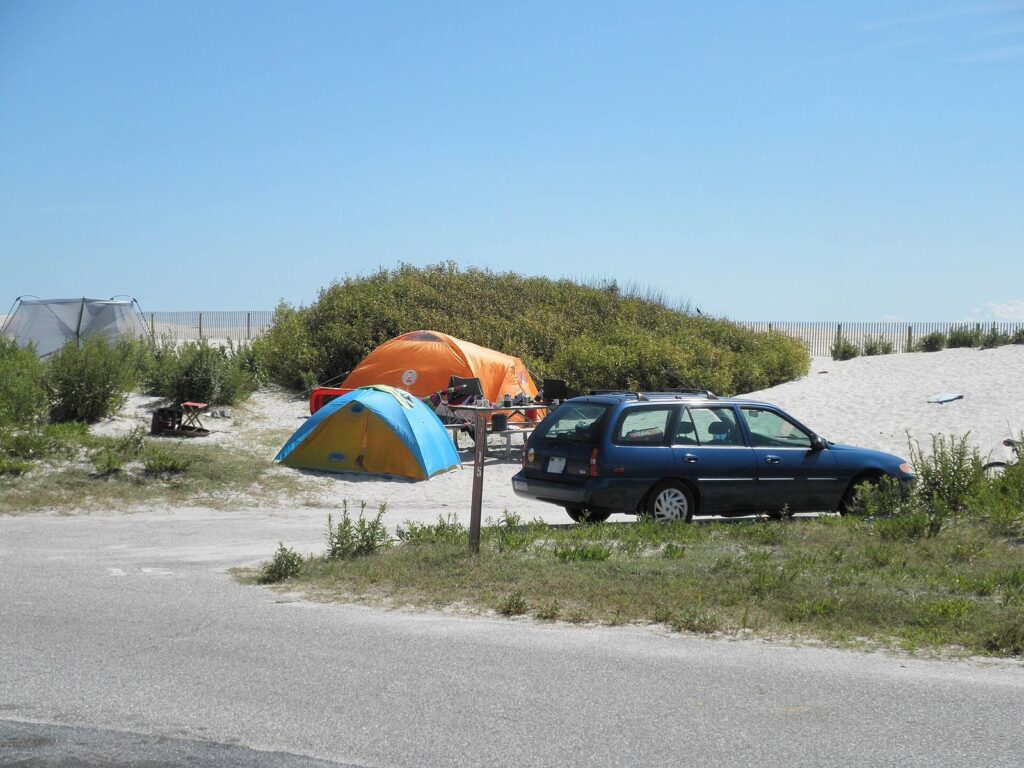
The National Seashore’s campgrounds are simple: chemical toilets, drinking water and cold showers from mid-March to mid-November, with no hookups anywhere. Oceanside puts you right behind the dunes, sandy and exposed, with the surf a short walk away and the wind to match. Bayside is a little more sheltered, faces the sunset over the bay and is closer to the marsh, which means more mosquitoes on still evenings. Book on Recreation.gov, and be quick: the Park Service says nearly all weekend reservations are gone on the first day they open, six months ahead.
How to get a campsite
National Seashore sites open for booking on Recreation.gov six months ahead, and summer weekends often go the day they open. If you miss them, look at midweek dates, check back for cancellations as your dates approach, or aim for May, September or October, when sites are far easier to get. From November 16 to March 14, Oceanside’s Loop 2 switches to first come, first served, while Bayside stays reservable all year. The state park books through Maryland’s own system, separately, so if one park is full, try the other.
State park camping
Assateague State Park’s campground is the comfortable option, with electric hookups, bathhouses with hot water and a nature center between the D and E loops that’s open in the camping season. It’s the better pick for families with young kids or anyone who wants a real shower after a sandy day. Reserve through Maryland’s state park reservation system, and check the season dates there, since the campground closes for winter.
Camping tips that matter here
- Stakes: ordinary tent pegs pull out of sand. Bring long sand stakes, and guy everything out; the wind rarely drops for long.
- Bugs: a screened shelter and a tent with good mesh are worth more than any repellent in July.
- Horses: lock food in the car or a latching hard-sided cooler, and never leave it on the table while you’re at the beach.
- Heat: there’s little shade at Oceanside. A pop-up canopy that can take wind helps; one that can’t becomes a kite.
- Timing: spring and fall are the most comfortable months for a tent. Winter camping at Bayside or Oceanside Loop 2 is quiet and bug-free, but cold and windy.
What to do on Assateague Island: paddling, crabbing, trails and bikes
Beyond the beach and the horses, most of what there is to do happens on the bay side, where the water is shallow, warm and sheltered.
Kayaking and canoeing
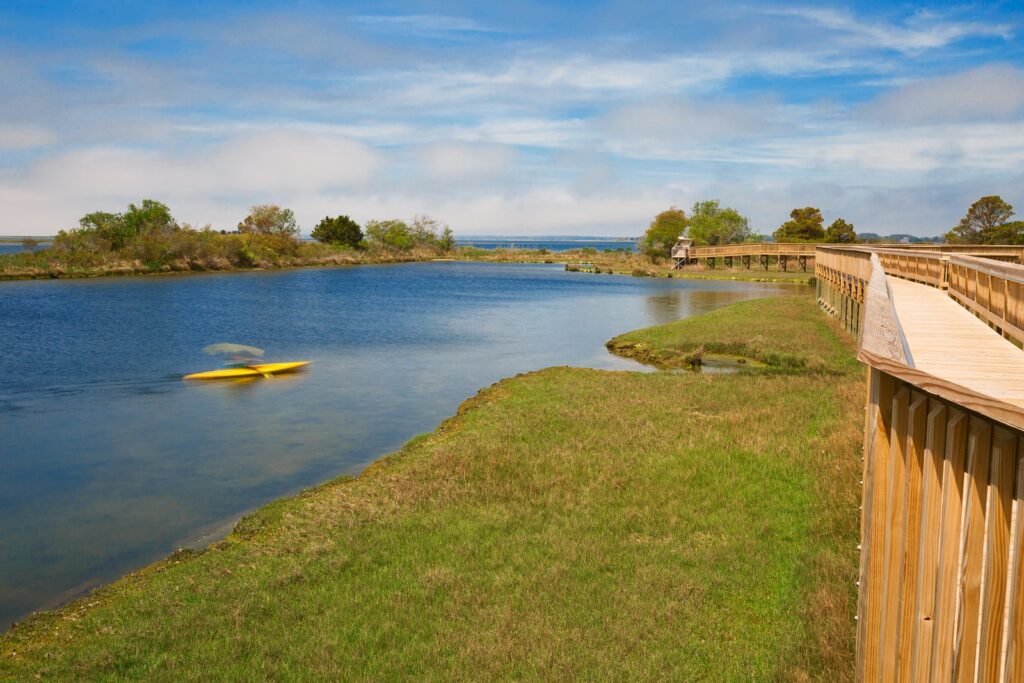
Paddling the bay behind the island is one of the best ways to see herons, egrets and the horses grazing the marsh edges. The Park Service has designated launch areas, and Assateague Outfitters rents kayaks and canoes in season. Go early, before the afternoon wind builds, check the tide so you don’t end up dragging a boat across a mudflat, and carry water and sunscreen even for a short loop. Experienced paddlers can reach the backcountry campsites by water with a permit.
Crabbing and clamming
Blue crabs are, in the Park Service’s words, one of Assateague’s best known and most sought-after creatures, and a chicken neck on a string off the bayside shore is a classic afternoon with kids. Clamming in the bays behind the island is allowed too. Both come with Maryland size limits and rules that change, and licensing depends on your gear and where you live, so check the current regulations at the visitor center before you drop a line.
Surf fishing
Surf fishing is allowed along the ocean beach. You’ll need Maryland’s Chesapeake Bay and Coastal Sport Fishing License: $15 for residents ($6 for seven days) or $22.50 for non-residents ($12 for seven days). To drive onto the beach to fish, you need an over-sand vehicle permit, covered below.
Nature trails
The Maryland end has three short nature trails, each under a mile: one through the marsh, one through the pine forest on a boardwalk, and one across the dunes. They’re flat, easy and good for an hour, especially with kids, and each shows a different slice of the island. Dogs aren’t allowed on any of them.
Biking
Several miles of bike paths run through both ends of the island, and cycling in costs less than the vehicle fee. Bring a lock, plenty of water and repellent for the stretches beside the marsh.
Horseback riding and birding
You can ride your own horse on the beach in the over-sand vehicle zone in season, and the horse camp is open from October 16 to April 14. Birders come year-round: herons and egrets in the marsh in summer, shorebirds on migration, and waterfowl in the bays in winter.
Plan it: paddle or crab in the morning, beach in the middle of the day, trails and horse-watching in the evening. That rhythm keeps you off the water when the wind picks up and out of the sun when it’s strongest.
Over-sand vehicles and surf fishing access
The National Seashore allows four-wheel-drive vehicles on a designated stretch of the Maryland beach with an over-sand vehicle (OSV) permit: $110 for a standard permit, or $200 for the Bullpen permit, sold online only through Recreation.gov. Read the Park Service’s OSV page for the required equipment and rules before you buy.
Check conditions before you tow gear down, too. Barrier-island beaches wash over in storms, and a Park Service alert dated September 22, 2026 had the Maryland OSV zone closed because of overwash. Closures like that can last days or much longer, depending on what the ocean did to the access routes.
Can you bring a dog to Assateague?
Sometimes, and only to parts of the Maryland end. The rules are strict because of the horses, the nesting birds and the heat:
- National Seashore (Maryland): dogs must be on a leash no longer than 6 feet at all times, in permitted areas only. They’re banned from all backcountry campsites, the nature trails, the lifeguarded beach, and the stretch of island north of the state park to the Ocean City Inlet.
- Assateague State Park: pets are allowed in the day-use areas only from Labor Day to the Friday before Memorial Day, which means no dogs there in summer.
- Virginia end: no pets anywhere, even in your car.
Ask at the entrance station which stretches are open to dogs that day. Then think about whether your dog will actually enjoy it: the Park Service warns that hot sand and sun can be harder on a pet than on you, and a dog that lunges at a horse is a problem for everyone.
Assateague with kids
Children tend to love Assateague, as long as the adults plan around the heat, the bugs and the horses. Teach the 40-foot rule before you arrive, not when a horse is already strolling toward your picnic. A horse’s hooves are at a small child’s eye level, and a friendly-looking mare can kick without warning, so hold hands and back away whenever one comes close.
The state park is the easier family base. Its campground has electric hookups and bathhouses with hot water, the nature center between the D and E loops runs during the camping season, and its guarded beach is a short walk from the lots. The National Seashore’s appeal for kids is the simplicity: short, flat nature trails, boardwalks over the marsh, and a bay shore where a chicken neck on a string and a long-handled net can fill an afternoon. Ask at the visitor center about ranger programs and junior ranger activities, which change with the season.
A few things make the day go better:
- Go early. Mornings are cooler, calmer and less buggy, and the lots have room.
- Shells, not animals. The limit is a gallon of unoccupied shells; anything alive stays on the beach.
- Ghost crabs after dark. A flashlight walk on the beach at night turns up pale ghost crabs sprinting for their burrows, which beats any screen.
- Swim near a guard. Rip currents are as real here as anywhere on the coast, and guarded beaches are the exception, not the rule.
- Plan the bathroom breaks. The National Seashore has chemical toilets; the state park has proper bathhouses.
Bugs, weather and the best time to visit
Assateague is at its most beautiful and most crowded in summer, and also at its buggiest. The Maryland end logged 1,054,662 of the island’s 2,325,195 visits in 2025, and 51% of those came in June, July and August. The same months bring mosquitoes and biting flies out of the marsh, worst at dawn and dusk and whenever the wind drops or blows from the land. An onshore ocean breeze keeps the beach bearable; a westerly can turn it into a sprint back to the car.
| Season | Bugs | Crowds | Worth knowing |
|---|---|---|---|
| December to February | None | Very quiet | Cold wind; Oceanside Loop 2 first come, first served; horse camp open |
| March and April | Few | Quiet, picking up from mid-March | Camping reservations required from March 15; showers back on from mid-March |
| May | Building | Busy weekends | State park summer fees and its summer dog ban start around Memorial Day |
| June to August | Heavy | Peak: over half the year’s Maryland visits | Lifeguards on duty; weekend campsites booked six months out; bring bug gear |
| September | Easing | Much quieter after Labor Day | Warm water, fewer people; dogs back in state park day-use areas |
| October and November | Few | Quiet | Horse camp opens October 16; Oceanside walk-in and Loop 1 close November 16 |
The best time: May, and mid-September to October
These are the months when the island works best. It’s warm enough for the beach, the campsites are easier to get, and the bugs are manageable or gone. September adds warm ocean water. If you must come in July or August, go early in the day, pick a breezy forecast, and plan to be on the ocean side at dusk rather than in the marsh.
Winter
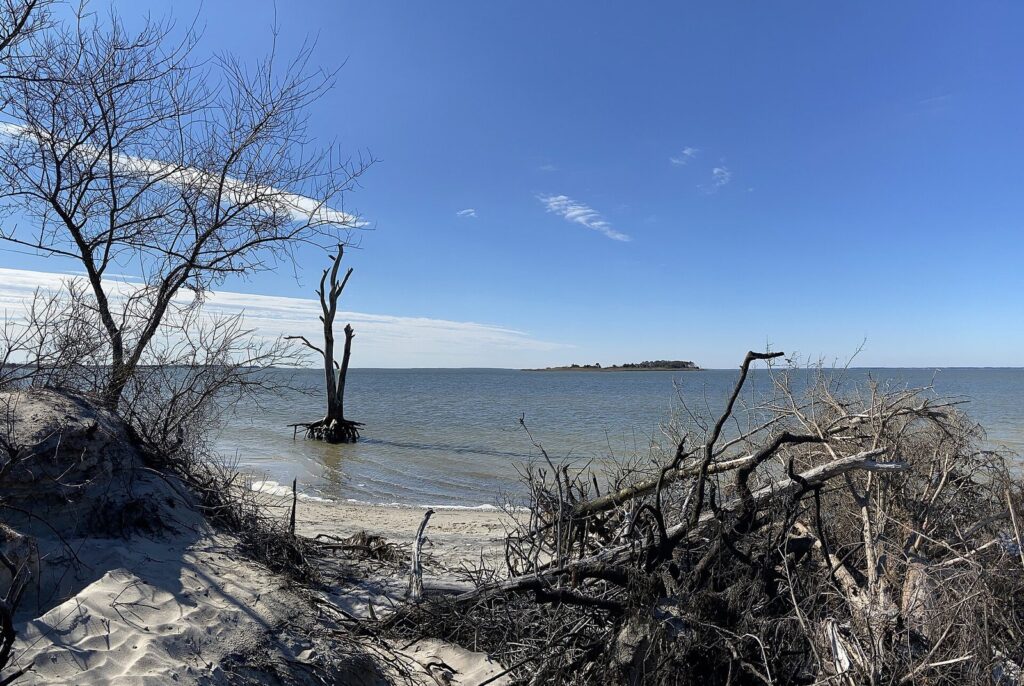
Assateague in winter is empty, cold, windy and quietly spectacular. The Maryland district stays open 24 hours, the horses are still out on the marsh, and waterfowl fill the bays. Dress for real wind, and check that the facilities you need are open.
Staying safe: ticks, heat, storms and hunting season
The horses get the warnings, but most bad days on Assateague come from smaller things.
- Ticks: they live in the grass, shrubs and forest edges. Stay on trails, wear repellent, and check everyone, including dogs, every evening. Lyme disease is present on the Eastern Shore.
- Poison ivy: it grows thickly in the dunes and along the forest trails. Learn the three-leaf pattern, and keep kids out of the undergrowth.
- Heat and sun: there’s almost no natural shade on the beach and very little in the Oceanside campground. Drink more than you think you need and take the middle of the day seriously in July and August.
- Thunderstorms: a flat, open beach is a bad place in lightning. Get off the sand and into a car at the first thunder.
- Surf: swim near lifeguards when they’re posted; float and swim parallel to shore if a rip current takes you.
- Hunting season: the National Seashore allows hunting in designated areas in season. If you wander off the main trails and beaches in fall or winter, wear something bright.
Maryland vs Virginia: Chincoteague and the pony swim
The southern third of Assateague is in Virginia, and it’s a different trip. No road runs between the two ends, so you drive around through Worcester County and into Virginia, which takes more than an hour each way from the Maryland entrance. You enter through the town of Chincoteague, which sits on its own island just west of Assateague and has the motels, restaurants and ice cream shops that the Maryland end lacks.
What’s different on the Virginia end
- Fees: the Chincoteague National Wildlife Refuge charges $10 a day, $25 a week or $45 a year per vehicle. The National Seashore’s $45 annual pass covers both ends.
- Horses: the Virginia herd, the Chincoteague ponies, is owned by the Chincoteague Volunteer Fire Company and lives in large fenced grazing areas in the refuge, so sightings are more predictable but less up close.
- No camping on the island, and no pets at all, even inside a car.
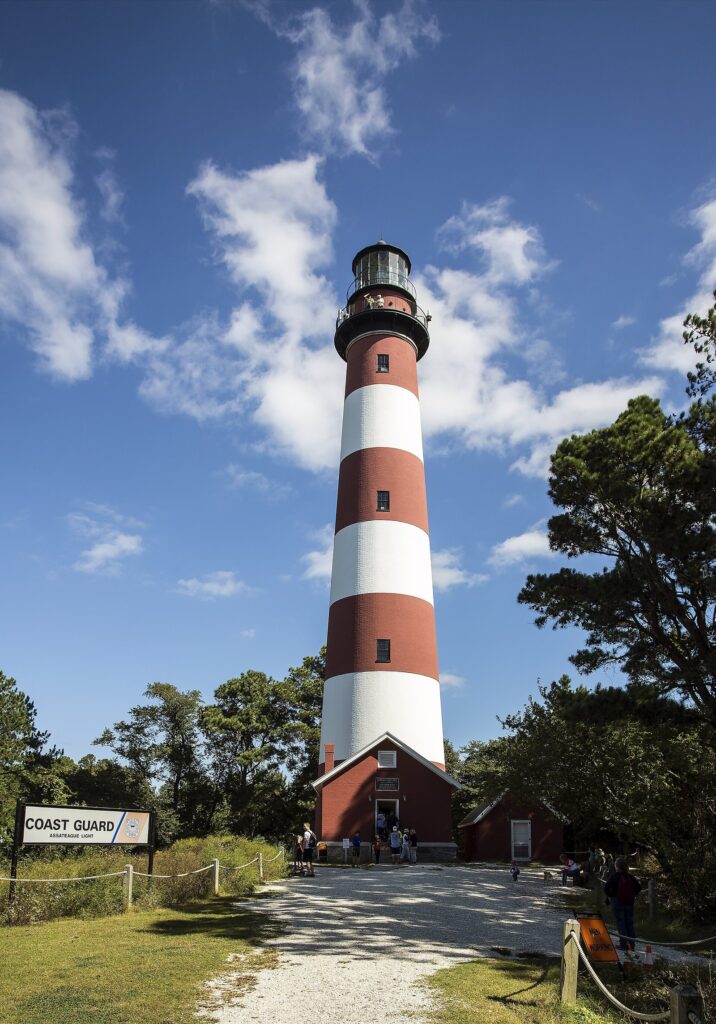
- The lighthouse: the red-and-white striped Assateague Lighthouse stands in the refuge’s woods. Check the refuge’s schedule if you hope to climb it.
Which end should you visit?
Pick Maryland if you want to camp on the island, see horses roaming free (sometimes right beside the road), bring a dog to parts of the beach, or pair the day with Ocean City. Pick Virginia if you want a town with motels and restaurants at the gate, the lighthouse, more predictable pony sightings in the refuge’s fenced grazing areas, or the pony swim in late July. With a week, do both, but base yourself at each end in turn; the drive between them eats a morning.
The Chincoteague pony swim
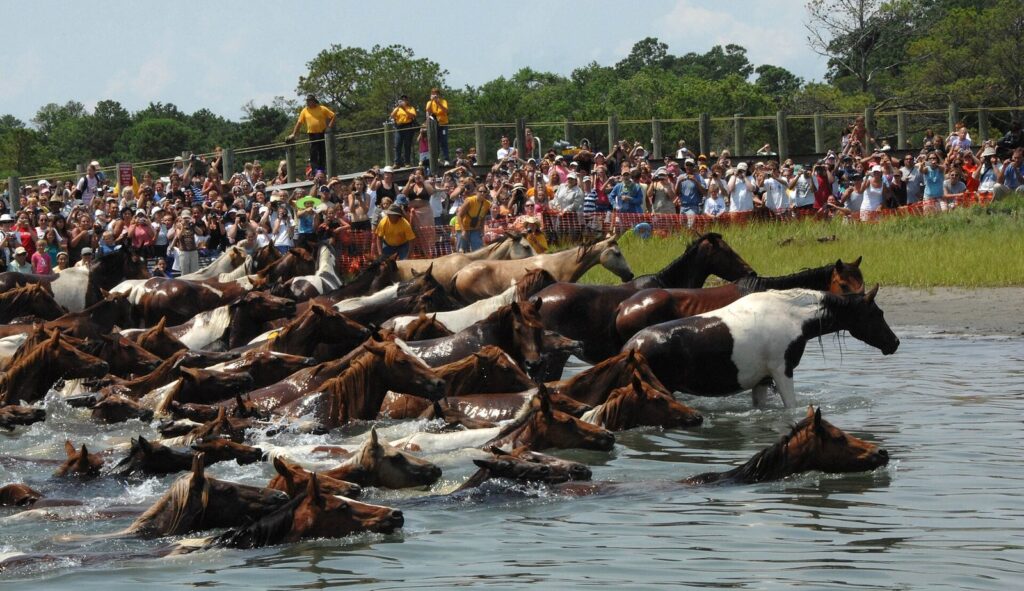
The famous pony swim is a Virginia event, not a Maryland one, and the horses involved are the fire company’s herd, not the Maryland horses. Traditionally held on the last Wednesday of July, it sees “saltwater cowboys” swim the ponies across Assateague Channel to Chincoteague at slack tide, with some foals auctioned the next day to raise money for the fire company and to keep the herd at a size the refuge can support. The 2026 swim was held on July 29. The tradition would put the 2027 swim on Wednesday, July 28, but confirm with the fire company before you book. Crowds are enormous and rooms in Chincoteague sell out far ahead. Marguerite Henry’s 1947 children’s novel “Misty of Chincoteague” is a big reason why.
Plan it: treat Chincoteague as an overnight rather than a day trip from Ocean City. The refuge’s fee page is the place to check current passes before you drive down.
Visitor centers and ranger programs
The Assateague Island Visitor Center sits on the mainland side of the Verrazano Bridge on Route 611 (11800 Marsh View Lane, Berlin), open daily from 9 a.m. to 4 p.m. except Thanksgiving and Christmas. It’s the place for exhibits, maps, the day’s conditions, current crabbing and clamming rules, and passes. Stop on the way in, not on the way out.
Across the bridge, the state park’s nature center, between the D and E campground loops, is open during the camping season. The Park Service runs ranger programs seasonally, mostly in summer: guided walks, talks on the horses and the barrier island, and programs for kids. Schedules change week to week, so check the boards at the visitor center or the Park Service website when you arrive. The Virginia end has its own visitor facilities, with their own hours.
What to pack for Assateague
The Maryland end sells almost nothing, so everything you need comes with you. For a summer day or an overnight:
- Water: more than you think, especially if you’re camping at Oceanside or walking far down the beach.
- Food in a latching, hard-sided cooler, kept in the car when you’re away from it. Soft bags and loose lids are an invitation to the horses.
- Bug protection: repellent, long sleeves and light trousers for dusk, and a head net for the worst July evenings.
- Shade that can handle wind, plus long sand stakes for it and for your tent.
- Sunscreen, hats and sunglasses.
- Binoculars or a long lens for horses and birds at a legal distance.
- A headlamp or flashlight for the campsite and the ghost crabs.
- Crabbing gear (string, chicken necks, a net and a bucket) and a Maryland fishing license if you plan to fish.
- A beach cart or wagon for hauling it all over the dune crossings.
- Trash bags, so nothing blows away or ends up inside a horse.
Getting to Assateague: from Ocean City, Washington, Baltimore and Philadelphia
From downtown Ocean City, the Maryland entrance is about 20 minutes: west on US 50 across the bridge into West Ocean City, then south on Route 611 to the Verrazano Bridge. If you’re basing yourself at the beach, our Ocean City, Maryland guide covers where to stay, parking and the resort’s app-only rules. There’s no public transit to the island, so you’ll need a car, a bike or a boat.
| From | Distance | Drive to the visitor center, no traffic | Route notes |
|---|---|---|---|
| Washington, DC | 137 to 138 miles | About 2 hours 40 minutes to 3 hours 15 minutes | US 50 over the Bay Bridge |
| Baltimore | 128 to 134 miles | About 2 hours 35 minutes to 3 hours 10 minutes | US 50 over the Bay Bridge |
| Philadelphia | 148 to 152 miles | About 2 hours 45 minutes to 3 hours 20 minutes | Through Delaware, no Bay Bridge |
| Wilmington, DE | 120 miles | About 2 hours 15 minutes to 2 hours 45 minutes | Through Delaware |
| New York City | 236 to 240 miles | About 4 hours 15 minutes to 5 hours 10 minutes | New Jersey Turnpike and Delaware |
| Richmond, VA | 224 miles | About 4 to 5 hours | Chesapeake Bay Bridge-Tunnel (Virginia) |
The Bay Bridge
From Washington and Baltimore, the route crosses the Chesapeake Bay Bridge on US 50. The toll is charged eastbound only and is cashless: $2.50 with a Maryland E-ZPass, $4 with Pay-By-Plate or an out-of-state E-ZPass, and $6 billed by video. The Maryland Transportation Authority’s best eastbound windows are Friday before 9 a.m. or after 8 p.m., Saturday before 7 a.m. or after 7 p.m., and Sunday before 10 a.m. or after 7 p.m. The eastbound span’s deck is being replaced, with overnight closures and two-way traffic on the other span until the work wraps up, which MDTA expects in spring 2027.
To the Virginia end
For Chincoteague, the drive is about 3 hours 10 minutes to 3 hours 50 minutes from Washington via the Bay Bridge, about 3 hours 30 minutes to 4 hours from Philadelphia, and about 3 hours 25 minutes to 4 hours 10 minutes from Richmond via the Bridge-Tunnel, all before traffic.
Parking and arrival
The beach parking lots in both Maryland parks can fill on summer weekends. Arrive before 10 a.m., or come after about 4 p.m., when the day crowd starts heading back to Ocean City and the light gets good for photos. Pay at the entrance station on the way in.
Assateague or Ocean City: which beach for what?
Most visitors don’t choose one or the other; they stay in Ocean City and spend a day on Assateague, or camp on Assateague and drive into Ocean City for dinner and the Boardwalk. The two are opposites, and knowing what each does well makes the split easy.
| Assateague | Ocean City | |
|---|---|---|
| The beach | Undeveloped, 37 miles, dunes and no buildings | About 10 miles, lined with hotels and condos |
| Cost to use it (2026) | $25 per vehicle for 7 days at the Seashore; $5 per person in summer at the state park | Free; parking $3.50 to $4.50 an hour in summer, paid by app |
| Lifeguards | At designated beaches in summer | Stands along the beach, 10 a.m. to 5:30 p.m. daily in season |
| Food and drink | Bring your own | Everywhere, from Boardwalk fries to crab houses |
| Horses | Yes | No |
| Camping | Yes, in both Maryland parks | No; campers stay on Assateague or the mainland |
| Dogs in summer | Parts of the National Seashore only | Not on the beach or Boardwalk from May 1 to Sept 30 |
| Best for | Nature, horses, paddling, camping, quiet | Boardwalk, rides, restaurants, nightlife |
If you’re deciding where to base a week, our guide to Ocean City’s areas and costs compares downtown, midtown, north Ocean City and West Ocean City, which is the closest part of the resort to the Assateague bridge.
Where to stay near Assateague
The best bed on Assateague is a sleeping bag: nothing else puts you on the island at dawn when the horses are out and the beach is empty. If camping isn’t for you, there are three good bases on the Maryland side and one in Virginia:
- Berlin, the small town inland, for inns, bed-and-breakfasts and good restaurants, a short drive from the bridge.
- West Ocean City, on US 50, for chain hotels that are the closest beds to the Route 611 turn.
- Ocean City itself, for the full beach-resort package, 20 minutes away.
- Chincoteague, Virginia, for motels, cottages and restaurants if you’re focusing on the Virginia end or the pony swim.
In summer, book early wherever you stay, and look for a room with a kitchen or at least a fridge: an Assateague day runs on packed lunches.
A day on Assateague: how to plan it
A good summer day on the Maryland end runs roughly like this:
- Early morning: arrive before 8 a.m. if you can. Stop at the visitor center once it opens at 9 for maps, rules and the day’s conditions, or head straight over the bridge and drive the park roads slowly for horses in the soft light.
- Mid-morning: walk one of the nature trails, or put in a kayak on the bay before the wind builds.
- Late morning to mid-afternoon: the beach, near a lifeguard, with shade, water and a latching cooler. Walk 10 minutes away from the parking area for space.
- Afternoon: crabbing off the bayside with chicken necks, or a bike ride if the breeze is up.
- Evening: look for horses on the beach and along the roads, then watch the sunset over the bay. Dinner in Berlin or West Ocean City is a short drive back.
In spring and fall, you can drop the timing and just wander. In winter, go in the middle of the day, when it’s warmest, and bring binoculars for the birds on the bay.
If you have a second day, spend it on the water or at the edges of the day. Paddle the bay at first light for horses grazing the marsh, walk the dune trail in the late afternoon, and take the long drive around to Chincoteague only if the Virginia end’s refuge, lighthouse and ponies are firmly on your list.
What to skip on Assateague
Skip the close-up horse photo. Forty feet is the legal minimum, and a telephoto lens beats a bite.
Skip feeding anything, horses, gulls or foxes. Fed wildlife turns into trouble, and some of it ends up removed.
Skip a July evening in the marsh without bug gear. Head to the ocean side at dusk, or leave before it.
Skip ordinary tent stakes. They won’t hold in sand; bring long ones.
Skip driving to the Virginia end on a whim. It’s more than an hour around by road with no shortcut, and dogs aren’t allowed even in the car.
Skip the midday summer arrival. Come early or late, when the lots have space and the light is better.
Skip counting on buying lunch. Pack everything; the Maryland end has almost nothing for sale.
Assateague FAQ
Is Assateague Island worth visiting?
Yes. It’s Maryland’s best natural beach, with 37 miles of undeveloped sand, wild horses (83 on the Maryland end in March 2026), bay paddling and crabbing, and campgrounds behind the dunes, all 20 minutes from Ocean City. The downsides are summer bugs, little shade and few services, so visit in May or from mid-September, or bring repellent, water and food.
What is there to do on Assateague Island?
Watch the wild horses from at least 40 feet, swim at the summer lifeguarded beaches, walk the three short nature trails, kayak or canoe the bay (rentals in season from Assateague Outfitters), crab and clam in the bays, surf fish, bike, camp, and join a seasonal ranger program. With a permit, you can drive the over-sand vehicle zone to fish.
Can you visit Assateague Island?
Yes, from two directions. The Maryland end is reached by Route 611 over the Verrazano Bridge, 20 minutes from Ocean City, and its National Seashore district is open 24 hours ($25 per vehicle for seven days). The Virginia end is reached through Chincoteague, Virginia ($10 a day). No road connects the two, so pick one end per day.
Can you camp on Assateague Island Maryland?
Yes. The National Seashore has Oceanside and Bayside campgrounds at $40 a night, plus group, horse and backcountry sites; reservations are required from March 15 to November 15 and open six months ahead on Recreation.gov, and weekends usually sell out the first day. Assateague State Park’s campground costs $27.50, or $38.50 with electric. Virginia has no island camping.
Where can you see the wild horses on Assateague?
Anywhere on the Maryland end: along Bayberry Drive and the campground roads, in the marshes near the bridge, in campsites, and on the beach on hot, buggy days, when they seek the breeze. Look early or late in the day. In Virginia, the Chincoteague ponies graze in fenced areas of the wildlife refuge.
Is the Chincoteague pony swim in Maryland?
No. The pony swim takes place in Virginia, traditionally on the last Wednesday of July, when the Chincoteague Volunteer Fire Company swims its herd across Assateague Channel to Chincoteague. The 2026 swim was on July 29. The Maryland horses are a separate, wild herd managed by the National Park Service, and they’re never rounded up or sold.
Can you bring a dog to Assateague Island?
Only to parts of the Maryland end. The National Seashore allows dogs on a leash no longer than 6 feet in permitted areas, but not on nature trails, the lifeguarded beach, backcountry sites or the stretch north of the state park. The state park allows pets in day-use areas only from Labor Day to the Friday before Memorial Day. Virginia bans pets entirely, even in cars.
Related Maryland guides
Sources and verification
Every fee, date and rule on this page was checked on September 23, 2026 against the organizations listed below. The guide is compiled from those sources; it doesn’t claim first-hand visits.
- National Park Service: Assateague Island National Seashore fees, plus its Maryland camping, pets, things-to-do, hours, OSV and horse-safety pages
- National Park Service: 2026 horse population update
- Maryland DNR: Assateague State Park (fees read through a September 2026 archive copy), plus the park’s FAQ
- US Fish and Wildlife Service: Chincoteague National Wildlife Refuge fees
- Recreation.gov: Assateague Island National Seashore campground
- NPS Visitor Use Statistics, 2025
We also used the Maryland Transportation Authority (Bay Bridge tolls and best travel times), Maryland DNR fishing-license rates, the Maryland Park Service reservation system, and routed drive-time estimates, which are free-flow figures before traffic.
Maryland Tourism Guide is an independent publication. It is not affiliated with Visit Maryland or any agency or business named here, and no one paid to be included.
Photo credits
- Mare and foal in the marsh (featured image): photo by Acroterion, Wikimedia Commons (CC BY-SA 4.0)
- Wild horse in the dunes: photo by dbking, Wikimedia Commons (CC BY 2.0)
- Dunes and sand fencing: photo by Acroterion, Wikimedia Commons (CC BY-SA 4.0)
- Oceanside Campground: photo by NPS photo, Wikimedia Commons (public domain)
- Marsh boardwalk: photo by Nicolas Raymond from Bethesda, Maryland, USA, Wikimedia Commons (CC BY 2.0)
- Bayside in winter: photo by Nolabob, Wikimedia Commons (CC BY-SA 4.0)
- Assateague Lighthouse: photo by Acroterion, Wikimedia Commons (CC BY-SA 4.0)
- Chincoteague pony swim, 2007: photo by United States Coast Guard, PA2 Christopher Evanson, Wikimedia Commons (public domain)
- Sika deer: photo by Judy Gallagher, Wikimedia Commons (CC BY 2.0)