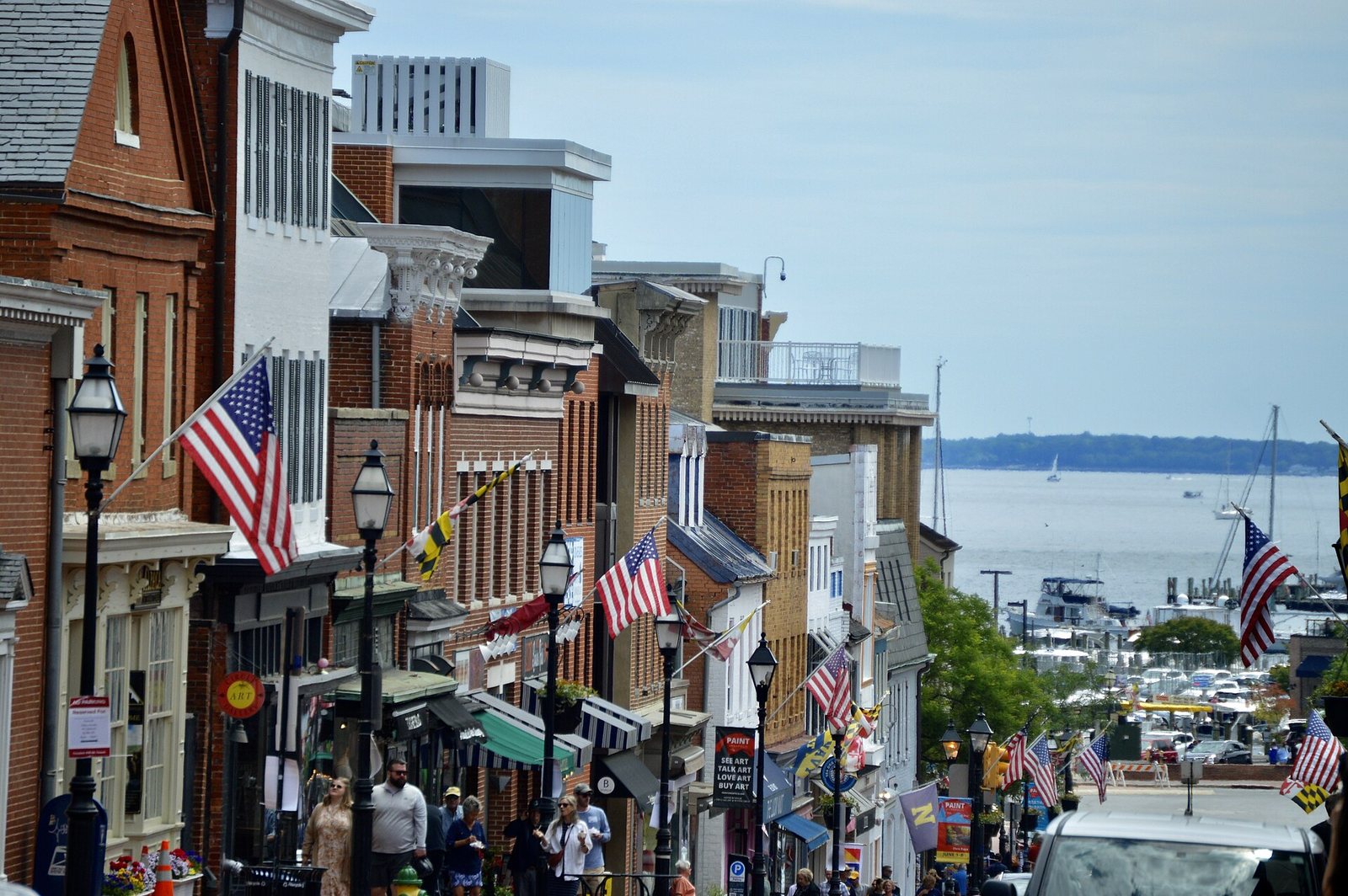
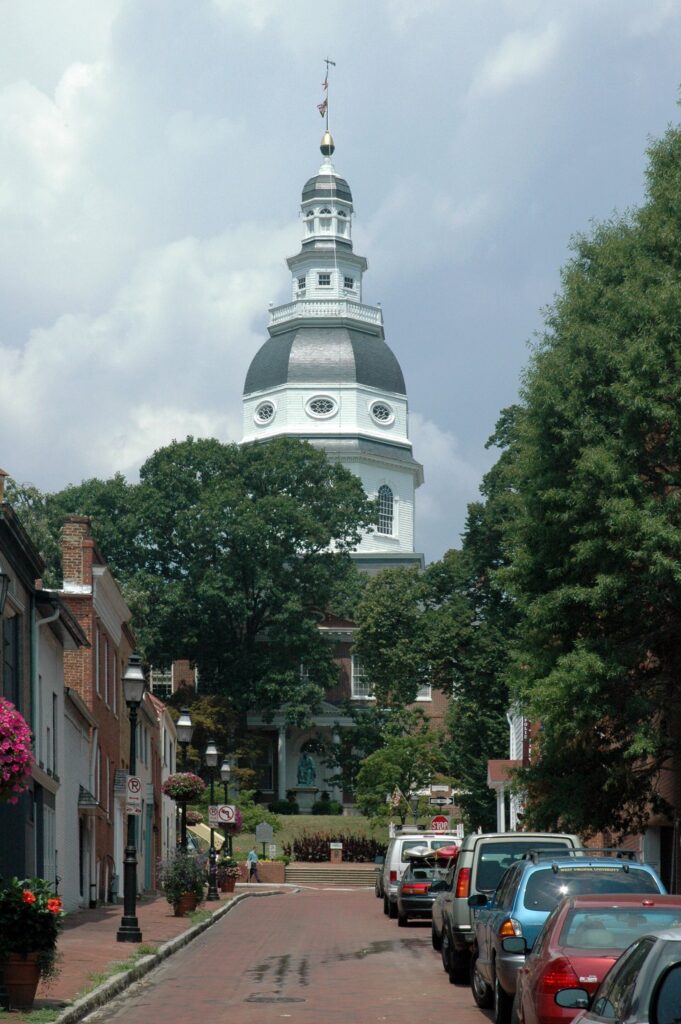
Stand at the bottom of Main Street, where the harbor pokes into town, and look up Francis Street: the State House dome fills the end of it, a few blocks uphill, which is roughly the whole commute of Maryland’s government. Behind you, boats idle up and down the narrow slip locals call Ego Alley so their owners can be seen from the restaurant patios. Off to the right, behind a brick wall, is the Naval Academy, the copper dome of its chapel showing above the trees. That compactness is why an Annapolis MD day trip works so well: colonial capital, sailing town and Navy school are all within a 15-minute walk of one another.
The short answer: Annapolis is one of the best day trips in the Mid-Atlantic and a good weekend base, about 40 minutes from both Washington and Baltimore. Walk the historic district, tour the Naval Academy (adults need a REAL ID or US passport, and non-US citizens aren’t admitted on public visits), see the State House, get out on the water, and eat crabs. Most of it is free or cheap; parking and a boat ride are the main costs. It’s busiest during the October boat shows and the Naval Academy’s Commissioning Week in May.
Every price, date and rule on this page was checked on September 23, 2026 against the operators’ and agencies’ own websites, including the Naval Academy, the Maryland State Archives, the City of Annapolis and the boat shows. Two things catch out visitors who last came a few years ago: the Naval Academy’s stricter ID rules (public access was suspended for part of 2026 and resumed on May 11), and construction at City Dock, part of a flood-protection project running through 2027.
On this page: At a glance · Is it worth it? · Known for · History · Walking route · Naval Academy · State House · Houses and museums · Guided tours · On the water · Boat shows · Food · Shopping and nightlife · Where to stay · Getting there · Parking · When to go · With kids · Rainy days · Nearby · Annapolis or its neighbors · One day · Free things to do · Costs · What to skip · FAQ
Annapolis at a glance
| Question | Answer (checked September 2026) |
|---|---|
| Where is it? | On the Chesapeake Bay at the mouth of the Severn River, Anne Arundel County. Maryland’s capital. |
| How far? | About 40 to 45 minutes from Washington or Baltimore without traffic. |
| Naval Academy | Walk in at Gate 1 (King George Street). Adults 18+ need a REAL ID or US passport; non-US citizens aren’t admitted on general visits. Guided walking tours $16 for adults. |
| State House | Free; open daily except Christmas and New Year’s Day. Bring photo ID for security. |
| Getting around | On foot. The free Magenta Shuttle links the Park Place garage area with City Dock. |
| On the water | 40-minute harbor cruises; two-hour schooner sails; Thomas Point Shoal Lighthouse tours ($95 in 2026). |
| Boat shows | Powerboat Show Oct 8 to 11, 2026; Sailboat Show Oct 15 to 18, 2026 ($32 general admission); Spring Sailboat Show Apr 23 to 25, 2027. |
| Hotel taxes | 8% Anne Arundel County room tax plus Maryland’s 6% sales tax. |
| Best time | May and September to October; December for the Eastport lights parade (Dec 12, 2026). |
| Construction | City Dock flood-protection work continues through 2027; expect detours and less parking by the water. |
Is Annapolis MD worth visiting?
Yes, and it rewards people who like history, boats or both. Annapolis was settled in 1649 by Puritans who had left Virginia, chartered as a city in 1708, and served as the capital of the United States when Congress met here in 1783 and 1784. It has kept an unusual number of its 18th-century buildings, laid out on a 1690s street plan of two circles with streets radiating from them, and it wraps that history around a working harbor full of sailboats. St. John’s College has been here since 1696, when it opened as King William’s School, and the Naval Academy since 1845.
Where Annapolis is less impressive is scale. It’s a small city with a small historic district, and a determined visitor can see the headline sights in a day. Summer weekends and boat-show week get crowded, parking downtown is tight, and restaurants on the water charge for the view. None of that is a reason to skip it, but it’s a reason to plan the day.
Verdict: worth a full day from Washington or Baltimore, and a weekend if you want time on the water or plan to see the Eastern Shore across the bridge. It’s Maryland’s most complete small historic city.
Go if you like colonial history, want to see the Naval Academy, love sailing or want a waterfront crab dinner within an hour of the Beltway.
Stay overnight if you’re here for a boat show, a Naval Academy event, the lights parade in December, or a sail at sunset without a drive home.
Skip it if you want beaches (Annapolis has waterfront, not beaches; Sandy Point by the Bay Bridge is the nearest) or big-city museums, which Baltimore and Washington do better.
What is Annapolis MD known for?
Ask five Marylanders and you’ll get some mix of these answers:
- The Naval Academy. Since 1845, the Academy has trained Navy and Marine Corps officers on the banks of the Severn, and midshipmen in uniform are part of the downtown scenery.
- Sailing. Annapolis bills itself as America’s sailing capital. Sailboats outnumber everything else in the harbor, summer Wednesday evenings bring club races, and the October Sailboat Show draws sailors from around the world.
- Colonial history. The State House, the 1690s street plan and one of the largest collections of 18th-century buildings in the country. All four of Maryland’s signers of the Declaration of Independence kept houses here.
- The State House. The oldest state capitol still in legislative use, where George Washington resigned his command and the Treaty of Paris was ratified.
- Crabs. Steamed blue crabs on paper-covered tables at the waterfront crab houses outside town, and crab cakes everywhere in it.
- St. John’s College. One of the country’s oldest colleges, known for its Great Books curriculum.
A short history of Annapolis
Puritans leaving Virginia settled at the mouth of the Severn in 1649 and called their settlement Providence. In 1695, Maryland moved its capital here from St. Mary’s City, and the town was renamed Annapolis for Princess Anne, soon to be queen of England. Governor Francis Nicholson gave it the baroque plan of circles and radiating streets that still shapes every walk you take, and in 1708 it was chartered as a city.
The 18th century was Annapolis’s golden age. Tobacco money built the Georgian brick houses that survive on Maryland Avenue and Prince George Street, and the town became a center of politics and society. In 1774, protesters forced the owner of the ship Peggy Stewart to burn it, with its cargo of taxed tea, in the harbor. After the Revolution, Congress met in the State House, where Washington resigned his commission in December 1783 and the Treaty of Paris was ratified in January 1784. In 1786, the Annapolis Convention met here and called for the gathering in Philadelphia that wrote the Constitution.
Baltimore soon eclipsed Annapolis as a port, which is partly why so much of the old town survived: there was less money and less reason to tear it down. The Naval Academy arrived in 1845 on the site of Fort Severn and grew into the dominant presence it is today. The harbor has a darker history too. Enslaved Africans were brought ashore at this dock, and the Kunta Kinte-Alex Haley Memorial at City Dock marks the arrival in 1767 of the ancestor Alex Haley traced in “Roots.”
A walking route through the historic district
The historic district is small enough to walk in two or three hours with stops, and the street plan does the navigating for you. In the 1690s, Governor Francis Nicholson laid out two circles on the high ground, one for the State House and one for St. Anne’s Church, with streets running out from them like spokes, and that plan still holds. This loop takes in the main sights:
- State Circle and the State House. Start at the top of town. Go inside if you have photo ID; the building and its Old Senate Chamber are covered below.
- Maryland Avenue. Walk northeast from State Circle along a street of small shops and galleries toward the Naval Academy. Near its far end stand the Hammond-Harwood House, built in 1774, and the Chase-Lloyd House across the street.
- Prince George Street and the Paca House. Turn right and walk down Prince George Street to the William Paca House and Garden, home of a signer of the Declaration of Independence, with a restored 18th-century garden behind it.
- The Naval Academy. Gate 1 is on King George Street, a block or two away. Budget at least 90 minutes inside (see below for ID rules).
- City Dock and Ego Alley. Walk down Randall Street to the harbor, where the Kunta Kinte-Alex Haley Memorial marks the arrival of enslaved Africans at this dock. Construction may reroute you around parts of the waterfront through 2027.
- Main Street. Climb from the water up Main Street, with its brick storefronts, flags and restaurants, to Church Circle and St. Anne’s.
- West Street or Franklin Street. Finish on West Street for restaurants and bars, or detour to the Banneker-Douglass-Tubman Museum on Franklin Street, Maryland’s museum of African American history.
Plan it: start early at the Naval Academy or the State House, which both need ID and security lines, and save Main Street and City Dock for late afternoon, when the light is good and the patios open up. Wear shoes for brick sidewalks and hills.
Visiting the Naval Academy: ID rules, tours and what to see
The US Naval Academy’s grounds, known as the Yard, are open to the public, but the rules are stricter than many older guides suggest, and they tightened in 2026. The Academy suspended public access from about February 28 to May 10, 2026, and reopened to visitors on May 11. Read the Academy’s visit page before you go, because access can change at short notice.
Getting in
- Walk in through Gate 1, on King George Street, or Gate 8. There’s no visitor parking inside; park downtown.
- ID: every adult 18 or older needs a REAL ID-compliant license or a US passport.
- Citizenship: non-US citizens are not admitted on general public visits. International visitors should check the Academy’s site for any sponsored-visit options rather than turning up at the gate.
- Bags: no large bags.
- Hours: 6 a.m. to 8 p.m. from March to October, and to 6 p.m. from November to February.
Tours
Guided walking tours leave from the Armel-Leftwich Visitor Center, open 9 a.m. to 5 p.m. from March through December. The 90-minute tour costs $16 for adults, $15 for seniors, $14 for K-12 students and $10 for military; book or check times on the tour operator’s site. You can also walk the Yard on your own.
What to see
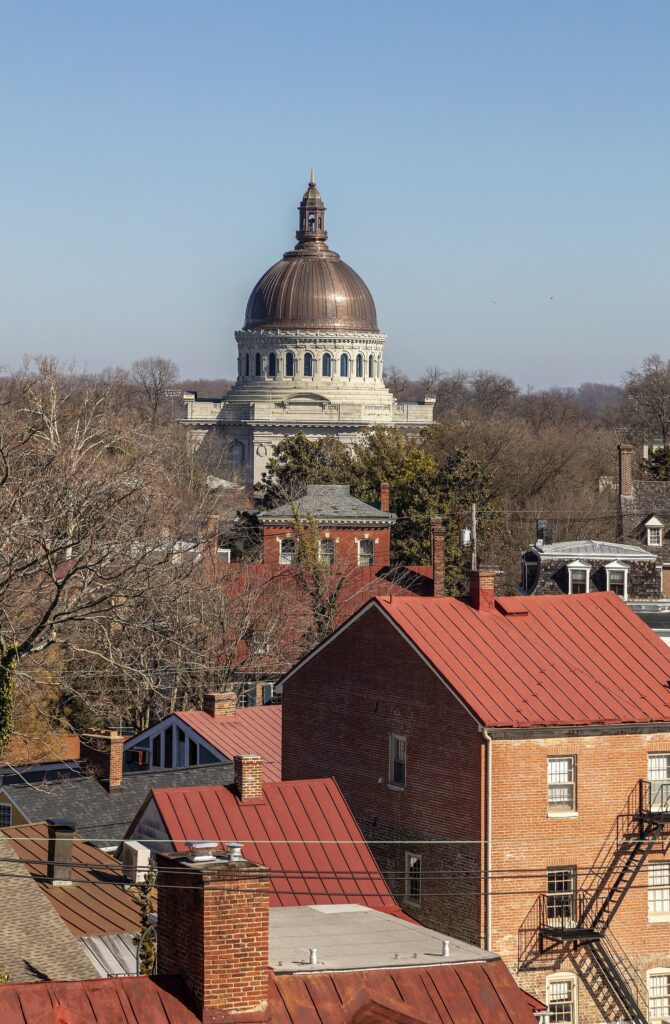
The Naval Academy Chapel, with its big copper dome, is the landmark; beneath it is the crypt of John Paul Jones, the Revolutionary War naval hero. The Naval Academy Museum in Preble Hall covers the Navy’s history with ship models, flags and artifacts. Walk the seawall along the Severn for the harbor views, and look at Bancroft Hall, the enormous dormitory where the Brigade of Midshipmen lives. The Academy’s biggest week for visitors is Commissioning Week in late May (May 16 to 22 in 2026; check the Academy’s site for 2027 dates), when graduation brings families, ceremonies and very full hotels.
Plan it: go early in the day, bring the right ID for every adult, leave big bags in the car, and allow two hours if you want the tour plus the chapel and museum.
The Maryland State House
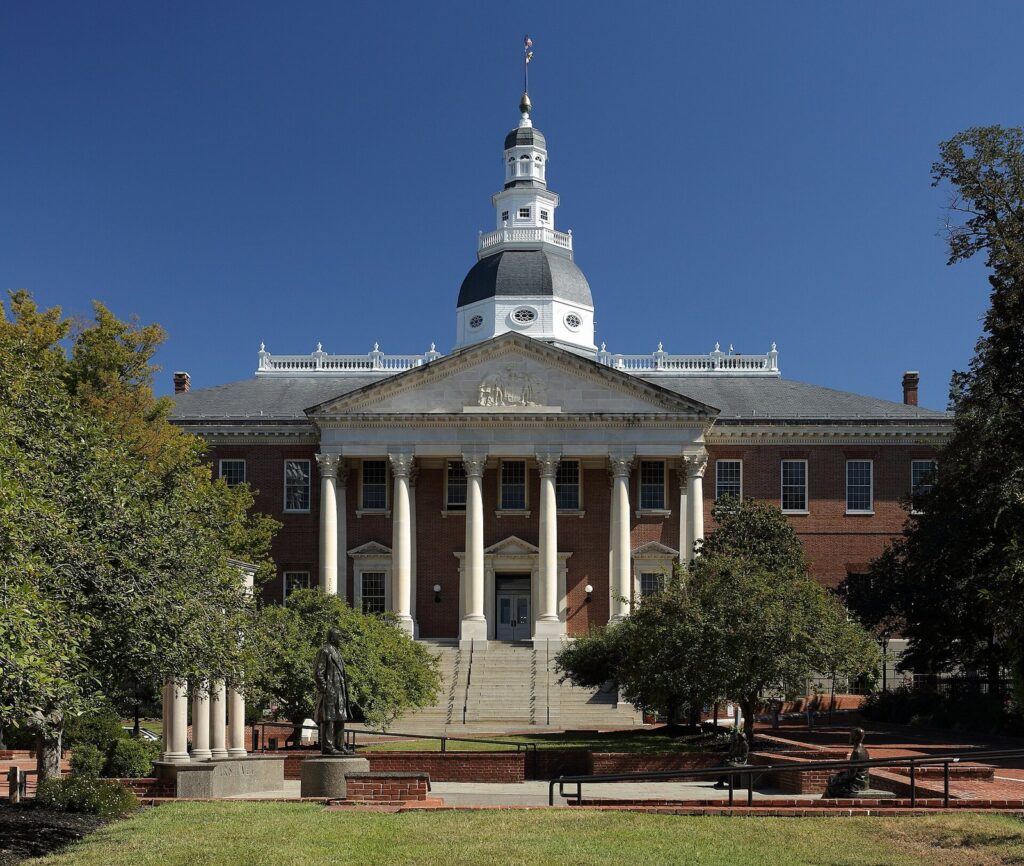
The Maryland State House is the oldest state capitol still in continuous legislative use, and the only one that has also served as the capitol of the United States. Congress met here from late 1783 into 1784, and two things happened in the Old Senate Chamber that make it worth the security line: George Washington resigned his commission as commander in chief there on December 23, 1783, and Congress ratified the Treaty of Paris, ending the Revolutionary War, there on January 14, 1784. The wooden dome on top, held together without nails, is described by the state as the largest of its kind in the country.
The building is open daily except Christmas and New Year’s Day, with posted hours of roughly 9 a.m. to 5 p.m. (the State Archives also lists an 8:30 a.m. opening, so check the State House visitor page). Entry is free; bring photo ID for the security check. From January into April, when the General Assembly is in session, the building is busy with legislators and lobbyists, which is part of the show.
Historic houses and museums
- William Paca House and Garden: the Georgian home of a Declaration signer, with a restored terraced garden. Guided house tours cost $12 for adults and $7 for children 3 to 17 in 2026; garden-only entry is $5.
- Hammond-Harwood House: a 1774 house on Maryland Avenue, often cited as one of the finest colonial houses in the country, designed by William Buckland. Check its site for tour days and prices.
- Banneker-Douglass-Tubman Museum: Maryland’s official museum of African American heritage, at 84 Franklin Street. Free; open Tuesday to Saturday, 10 a.m. to 4 p.m.
- Annapolis Maritime Museum: in Eastport, on the Bay’s oyster and boating past, and the starting point for Thomas Point Shoal Lighthouse tours.
- St. John’s College: a walk across the campus, one of the country’s oldest, takes you past colonial-era buildings and down to College Creek.
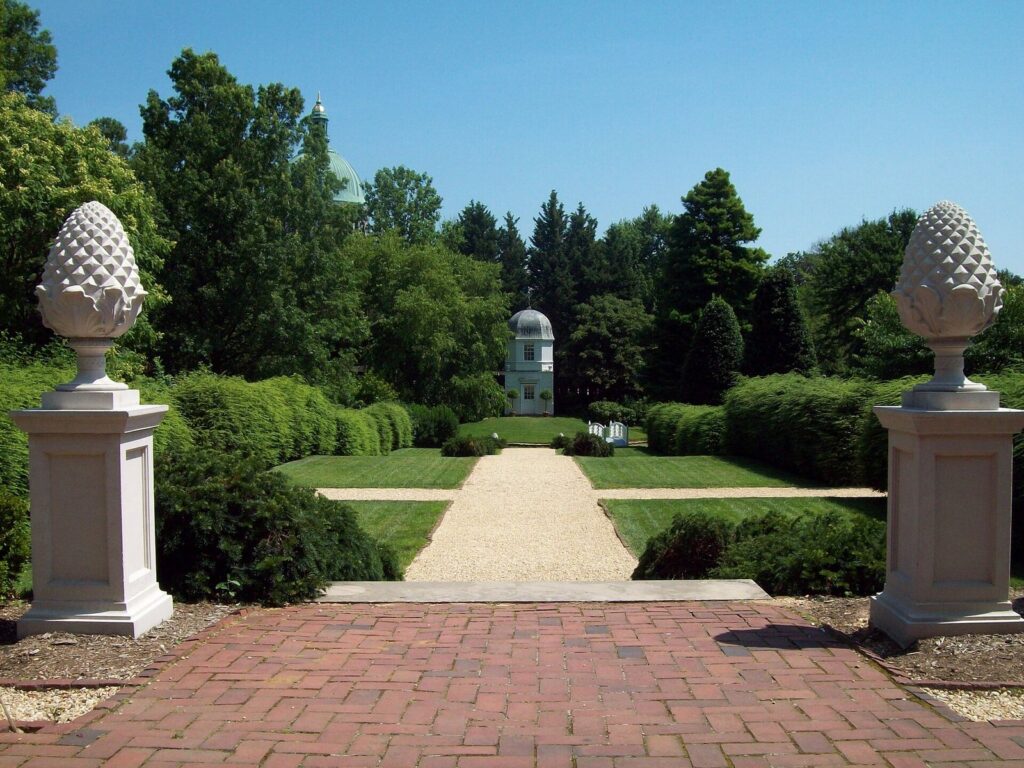
Plan it: pick one house tour, the Paca House for the garden or the Hammond-Harwood House for the architecture, rather than trying to fit both into a day with the Naval Academy.
Guided tours on land
You can see Annapolis perfectly well on your own, but a guide adds the stories that the brick fronts don’t tell.
- The Naval Academy walking tour: 90 minutes with a guide, $16 for adults in 2026, and the easiest way to understand the Yard.
- Historic district walking tours: several operators run history walks from downtown in season, some led by guides in colonial dress. Check current schedules; most run on weekends and in the warmer months.
- Evening ghost tours: a town this old has its share of stories, and lantern-lit walks run on many evenings, especially in October.
- House tours: the William Paca House’s hour-long guided tour ($12 for adults in 2026) is the best single look inside an 18th-century Annapolis house.
Plan it: take the Naval Academy tour in the morning and a history or ghost walk in the evening; together they cover the two sides of the town.
Sailing, boat tours and the water
Annapolis calls itself America’s sailing capital, and on a summer evening, with the harbor full of boats, it’s hard to argue. You don’t need your own boat to get out there.
Harbor cruises
Watermark’s 40-minute narrated cruises aboard the Harbor Queen loop Annapolis Harbor and run along the Naval Academy waterfront. Its 2026 season started on March 21, with cruises hourly from 11 a.m. to 6 p.m. on weekends and from noon to 3 p.m. on weekdays in season. It’s the quickest way to see the town from the water, and a good option with kids.
Sailing
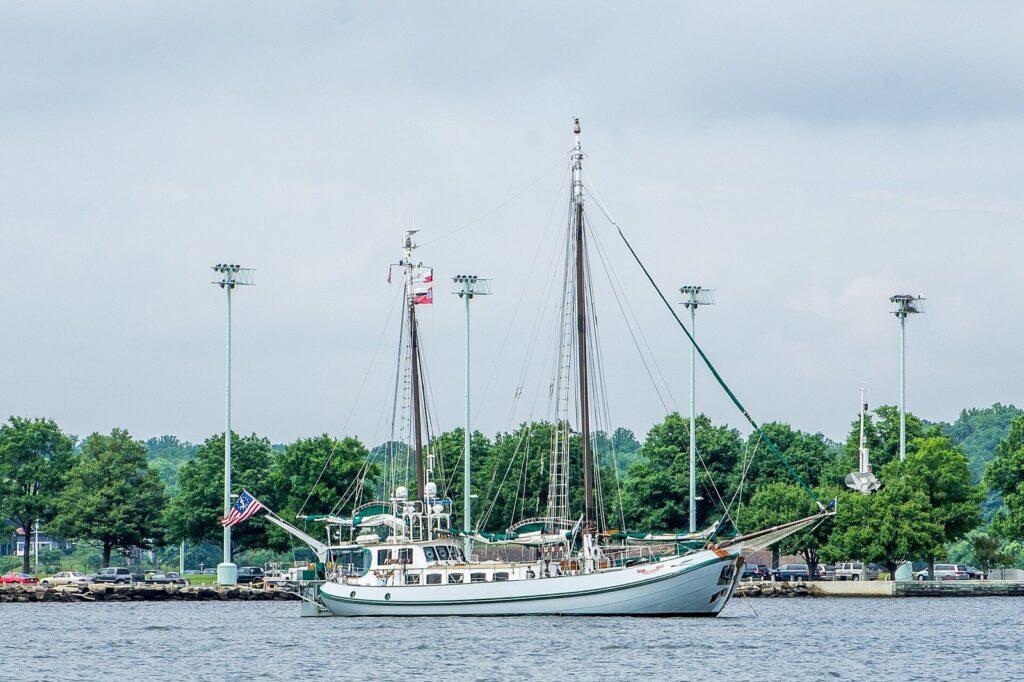
The Schooner Woodwind, a 74-foot wooden schooner, sails two-hour public cruises in season with up to 30 guests, and passengers can help raise the sails or take the wheel. For a hands-on start, several Annapolis sailing schools run introductory lessons. And on summer Wednesday evenings, the Annapolis Yacht Club’s races fill the harbor with sails; the Spa Creek Bridge and the Eastport waterfront are good free spots to watch the finish.
Thomas Point Shoal Lighthouse
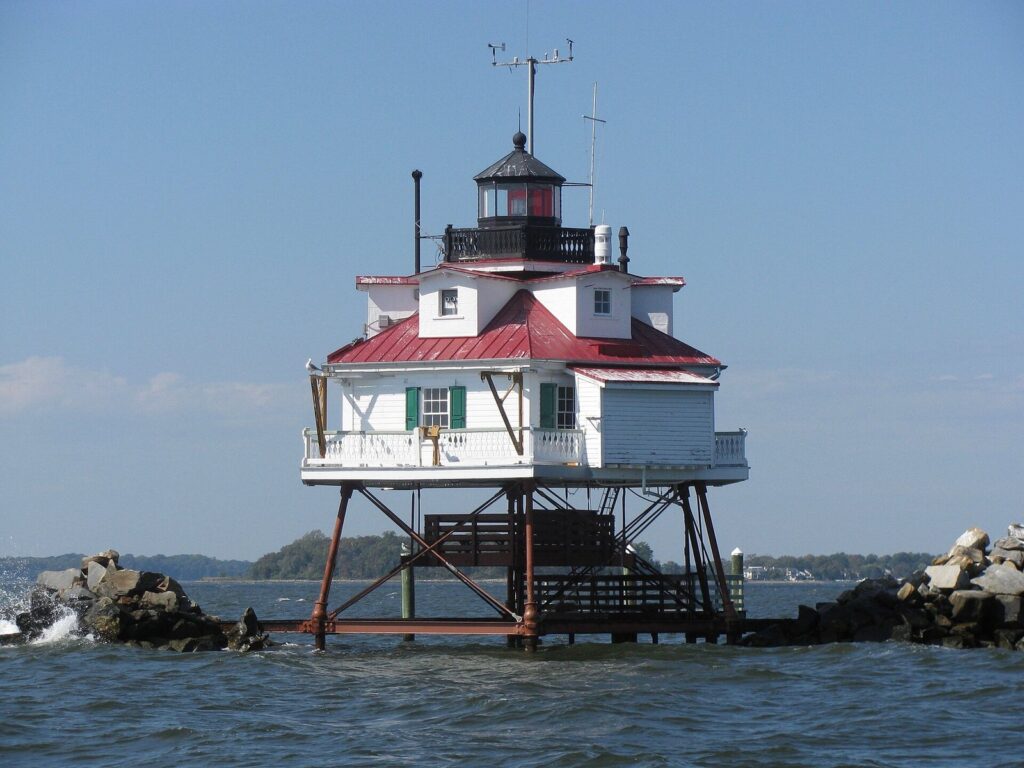
Thomas Point Shoal Light, a hexagonal cottage on iron legs a few miles south of town, is the Chesapeake’s best-known lighthouse and is often described as the last screwpile lighthouse in the Bay still standing on its original site. Tours leave from the Annapolis Maritime Museum at 9:30 a.m. and noon on scheduled dates and cost $95 per person in 2026, including museum admission. The trip takes about two and a half hours: half an hour by boat each way and about an hour and a half inside the lighthouse. Dates are limited, so book as soon as the calendar opens.
Eastport
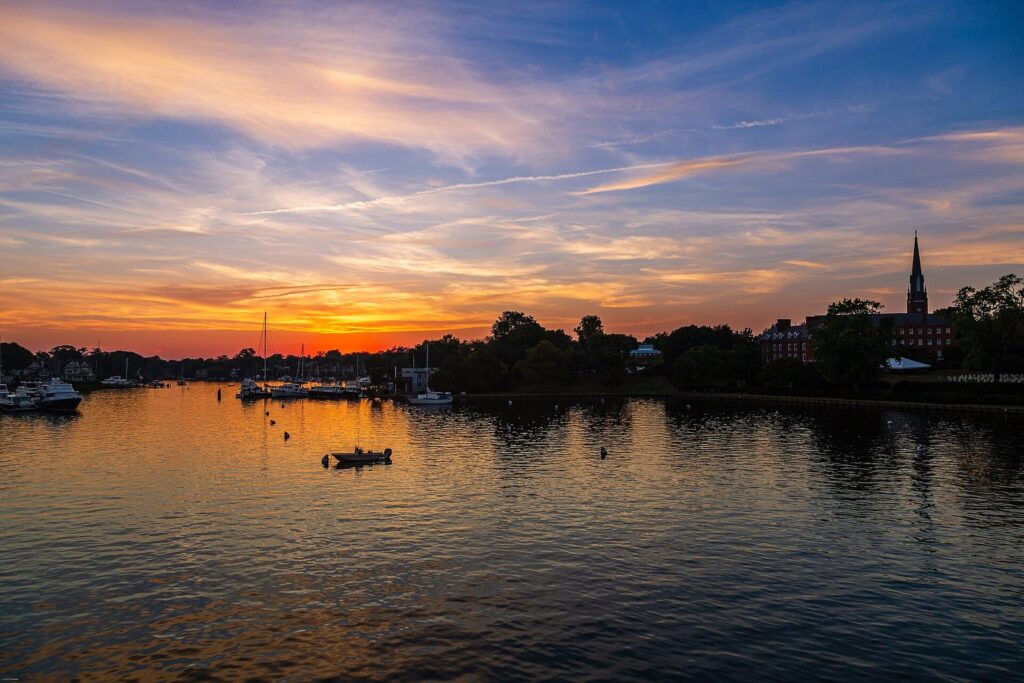
Across the Spa Creek drawbridge from downtown, Eastport is the working and drinking side of the harbor: marinas, boatyards, sailmakers and waterfront bars. In 1998 it declared itself, tongue in cheek, the Maritime Republic of Eastport, and the joke has stuck. It’s a 10-minute walk from City Dock and the best place to watch boats come and go at sunset.
Plan it: book a sail for late afternoon, when the wind usually fills in and the light softens, and time dinner in Eastport afterward.
The Annapolis boat shows
Every October, the harbor fills with floating docks built out from City Dock for two of the country’s best-known in-water boat shows, one for powerboats and one for sailboats. The dates are:
| Show | Dates | Where |
|---|---|---|
| Annapolis Powerboat Show | Oct 8 to 11, 2026 | City Dock |
| Annapolis Sailboat Show | Oct 15 to 18, 2026 ($32 general admission) | City Dock |
| Bay Bridge Boat Show | Apr 16 to 18, 2027 | Grasonville, Kent Island side of the Bay Bridge |
| Annapolis Spring Sailboat Show | Apr 23 to 25, 2027 | City Dock |
Check the boat shows’ site for fall 2027 dates. Show weeks change the whole town: hotel rates climb and rooms sell out, downtown streets close for setup and teardown, and parking is scarce. If you’re coming for the shows, book lodging early, buy tickets on the boat shows’ site, and use a park-and-ride shuttle if the show offers one rather than hunting for a downtown space. If you’re not coming for the shows, avoid those two October weeks.
Where to eat: crab houses, taverns and waterfront tables
Crab houses
For steamed crabs, the classic Annapolis move is to leave downtown. Cantler’s Riverside Inn sits on Mill Creek northeast of town, reachable by car or by boat, with picnic tables, brown paper and mallets; it was open daily in 2026, from 11 a.m. to 10 p.m. (11 on Fridays and Saturdays). Mike’s Restaurant and Crab House in Riva, on the South River southwest of town, is the other big name and is open year-round. Crabs are sold by the dozen at market price that changes with size and season, so ask before you order, and expect the best, heaviest local crabs from late summer into fall.
What to order
- Steamed crabs: by the dozen, dusted in spice, with a mallet, a knife and a roll of paper towels. Ask the size and the price before you order.
- Crab cakes: the test of a Maryland kitchen is how much lump crab and how little filler; broiled lets the crab speak, fried adds crunch.
- Crab soup: Maryland crab soup is the red, tomato-and-vegetable kind; cream of crab is the rich one. Many places will pour half and half.
- Rockfish: the local name for striped bass, the state fish, on menus when it’s in season.
- Smith Island cake: Maryland’s official state dessert since 2008, a tall stack of thin layers with fudge icing between them.
Downtown and Eastport
- Chick & Ruth’s Delly on Main Street has served breakfast, sandwiches, crab cakes and oversized milkshakes since 1965, opening at 6:30 a.m.
- Middleton Tavern at City Dock is one of the oldest continuously operating taverns in the country, with seafood and harbor views.
- Boatyard Bar & Grill in Eastport is the sailors’ hangout, busy on race nights; Baltimore’s Atlas Restaurant Group became its majority owner in 2026.
West Street, Main Street and the streets around Church Circle hold dozens more restaurants and bars, from crab-cake counters to white-tablecloth rooms. On summer weekends and during the boat shows, book dinner ahead.
Plan it: do crabs at lunch or early dinner at Cantler’s or Mike’s, then walk Main Street for dessert. If you only have downtown time, get a crab cake rather than a whole crab feast.
Shopping, nightlife and live music
Shopping
Maryland Avenue, between State Circle and the Naval Academy, is the prettiest shopping street, with small independent shops, galleries and antiques in old row houses. Main Street has the souvenir shops, clothing stores and ice cream, and West Street, running out from Church Circle, has galleries and restaurants in a newer, livelier stretch. For chain stores and malls, head out to the shopping centers near US 50, where parking is free.
Nightlife
Evenings in Annapolis mean a drink with a harbor view. The bars and taverns around City Dock and Main Street are busy on summer weekends, Eastport’s waterfront bars fill with sailors after races, and West Street has restaurants, bars and a live-music scene that draws touring acts. Midshipmen, legislators in session season and boat-show crowds all shape who’s out on a given night. Most of downtown is walkable after dark, but the streets are steep and the bricks uneven, so choose shoes accordingly.
Where to stay in Annapolis MD
Where you stay decides how much you’ll walk and how much you’ll pay to park.
- The historic district has inns, bed-and-breakfasts and a few hotels within walking distance of everything. It’s the most atmospheric and the most expensive, especially during boat shows, Commissioning Week and Naval Academy weekends. Ask about parking; many historic properties have little or none.
- The waterfront: a few hotels sit right on the harbor at City Dock, with water views and prices to match; Eastport, across Spa Creek, adds guesthouses and marina-side stays a short walk away.
- Chain hotels near US 50, on the edge of town, cost less and have free parking, but you’ll drive or ride-share downtown and pay to park there.
Budget for 14% in taxes: Anne Arundel County’s 8% room tax plus Maryland’s 6% sales tax. The most expensive and hardest weeks to book are the two October boat-show weeks, Commissioning Week in May, and home football weekends in the fall, when Naval Academy families fill the town. For those, book months ahead; for an ordinary weekday, a few weeks is usually enough.
Getting to Annapolis
| From | Distance | Drive, no traffic |
|---|---|---|
| Washington, DC | 30 to 31 miles | About 40 to 45 minutes |
| Baltimore | 29 to 32 miles | About 40 to 45 minutes |
| Wilmington, DE | 94 to 97 miles | About 1 hour 45 minutes to 2 hours (via the Bay Bridge) |
| Harrisburg, PA | 111 to 112 miles | About 2 hours to 2 hours 25 minutes |
| Philadelphia | 125 miles | About 2 hours 15 minutes to 2 hours 40 minutes (via the Bay Bridge) |
| Richmond, VA | 139 to 143 miles | About 2 hours 25 minutes to 2 hours 50 minutes |
| New York City | 213 to 216 miles | About 3 hours 40 minutes to 4 hours 30 minutes (via the Bay Bridge) |
From Washington, US 50 runs straight to Annapolis; from Baltimore, take I-97 south. Rush-hour traffic on US 50 can double the drive time, so avoid weekday mornings and evenings. Drivers coming from Philadelphia, Wilmington or New York may be routed over the Chesapeake Bay Bridge westbound, which is toll-free in that direction; tolls are collected only eastbound.
There’s no train to Annapolis. The nearest rail stations are at BWI Marshall Airport and New Carrollton, both a drive or ride-share away, and commuter buses mostly serve weekday rush hours. BWI Marshall is the closest major airport. For most visitors, the car is simplest: drive in, park once, and walk.
Parking and getting around
Downtown Annapolis is walkable but not easy to park in. The city runs four garages near the historic district, Gotts, Knighton, Park Place and Mills-Hillman, and they’re the best bet: garage rates start at a few dollars for the first hour, with daily maximums, and they’re usually cheaper and less stressful than circling for street spaces. Recent city programs have offered two hours free with validation coupons from participating downtown businesses and free Sunday mornings in some garages (exit before 2 p.m.); check the current parking details before you rely on them.
- The Magenta Shuttle: a free shuttle runs between the Park Place garage area and City Dock by way of West and Main streets, with extra service on special-event nights. It replaced the old downtown circulator trolley that older guides still mention.
- City Dock construction: the City Dock Resiliency Project, a flood-protection effort, continues through 2027, so parking at the water is limited and walking routes shift. Park in a garage and walk down.
- Holiday parking: in recent years the city has offered free downtown garage parking between Thanksgiving and New Year’s; check whether it’s running before you go.
- Event days: during the boat shows, Naval Academy events and big weekends, garages fill early. Arrive before 10 a.m. or use a park-and-ride shuttle when one is offered.
Walking and accessibility
Downtown is compact but not flat. Main Street climbs steeply from City Dock to Church Circle, many sidewalks are uneven brick, and some historic houses have steps at the door and narrow stairs inside. If anyone in your group uses a wheelchair or has trouble with hills, park in a garage near the top of town, ride the Magenta Shuttle down to City Dock, and call ahead to historic sites about access. The Naval Academy’s Yard is large and mostly level once you’re inside Gate 1.
When to visit Annapolis
| Season | What’s on | Crowds |
|---|---|---|
| Spring (March to May) | Bay Bridge Boat Show and Spring Sailboat Show (April 2027); Commissioning Week in late May | Moderate; very busy Commissioning Week |
| Summer (June to August) | Sailing season, Wednesday evening races, harbor cruises | Busy weekends; hot and humid |
| Fall (September to November) | Powerboat and Sailboat shows (Oct 8 to 11 and 15 to 18, 2026); Naval Academy football; Renaissance Festival weekends nearby | Very busy in boat-show weeks |
| Winter (December to February) | Eastport Yacht Club Lights Parade (Dec 12, 2026); General Assembly session from January | Quiet except the parade |
The best times
Late April to early June and mid-September to early October are the sweet spots: good sailing weather, walkable temperatures and fewer crowds, as long as you avoid the boat-show weeks and Commissioning Week if you don’t need them. Summer is fine for a harbor cruise and crabs, but the midday heat on brick streets is real.
The Eastport Yacht Club Lights Parade
On Saturday, December 12, 2026, at 6 p.m., the 44th annual lights parade sends dozens of boats covered in lights around Annapolis Harbor and Spa Creek for about two hours. It started in 1981 with one couple stringing lights on their boat, and it’s free to watch from the City Dock waterfront or the Spa Creek Bridge. Restaurants with harbor views book up early, and several boat operators sell parade cruises.
Annapolis with kids
- A harbor cruise: 40 minutes is the right length for young kids, with the Naval Academy and plenty of boats to look at.
- The Naval Academy: wide lawns, the seawall, the chapel crypt and the museum’s ship models. Children under 18 don’t need ID, but every adult does.
- City Dock: watching boats squeeze through Ego Alley never gets old, construction permitting.
- The Annapolis Maritime Museum: hands-on Bay history in Eastport.
- A milkshake at Chick & Ruth’s, ideally before the lunch rush.
- Sandy Point State Park: the nearest real beach, by the Bay Bridge (see below).
Annapolis on a rainy day
Rain doesn’t sink an Annapolis day, because most of the best sights have a roof:
- The Naval Academy Museum in Preble Hall and the chapel.
- The State House, with the Old Senate Chamber and its exhibits.
- The Banneker-Douglass-Tubman Museum, free, Tuesday to Saturday.
- A house tour at the William Paca House or the Hammond-Harwood House.
- The Annapolis Maritime Museum in Eastport.
- A long lunch on Main Street, followed by the shops on Maryland Avenue.
Boat tours may cancel in bad weather, so keep a harbor cruise or a sail flexible and rebook for the next dry afternoon.
Nearby: Sandy Point, the Renaissance Festival and Kent Island
Sandy Point State Park
At the western end of the Bay Bridge, Sandy Point is the closest beach to Annapolis, with Bay swimming and views of the bridge. From May 1 to September 30 it costs $5 per person on weekends and holidays and $4 on weekdays, and $3 per vehicle from October to April, with no out-of-state surcharge. On summer weekends and holidays from Memorial Day weekend to Labor Day, day visits need a reservation through parkdayuse.maryland.gov, with a fee of about $1.50; the system replaced the old capacity closures that used to shut the gates by mid-morning.
The Maryland Renaissance Festival
In Crownsville, just west of Annapolis, the Renaissance Festival ran its 50th season in 2026 on weekends from August 29 to October 25, plus Labor Day, with adult tickets at $31, sold online only. Check the festival’s site for 2027 dates.
Kent Island and the Eastern Shore
Across the Bay Bridge, Kent Island and the Eastern Shore begin. The eastbound toll is cashless: $2.50 with a Maryland E-ZPass, $4 with Pay-By-Plate or an out-of-state E-ZPass, and $6 by video. Avoid summer Friday afternoons and Saturday mornings eastbound, when beach traffic backs up.
Annapolis, Baltimore or St. Michaels?
Visitors often weigh Annapolis against its two neighbors, and each does something different.
| Annapolis | Baltimore’s Inner Harbor | St. Michaels | |
|---|---|---|---|
| Feel | Colonial capital and sailing town | Big-city waterfront with major museums | Small Eastern Shore harbor village |
| Headline sights | Naval Academy, State House, harbor | National Aquarium, Fort McHenry, historic ships | Chesapeake Bay Maritime Museum, the waterfront |
| Time needed | One to two days | Two to three days | A day or an overnight |
| Getting there from DC | About 40 to 45 minutes | About 45 minutes to an hour | Across the Bay Bridge (cashless toll eastbound) |
| Best for | History, sailing, crabs, a walkable day | Museums, kids, sports, nightlife | A slow waterfront getaway |
They pair well. Annapolis sits halfway between Baltimore and the Bay Bridge, so it slots neatly into a longer trip: a day in Baltimore, a day in Annapolis, then across the bridge to the Eastern Shore.
What to do in Annapolis for a day
A full day on foot, starting with the things that need ID and ending by the water:
- 9:30 a.m.: park in a city garage and walk to the Naval Academy’s Gate 1. Take the 90-minute walking tour or explore the chapel, John Paul Jones’s crypt and the seawall.
- Noon: lunch on Main Street, a crab cake at Chick & Ruth’s or a table at Middleton Tavern.
- 1:30 p.m.: the State House and the Old Senate Chamber, then Maryland Avenue and one historic house, the Paca House or the Hammond-Harwood House.
- 4 p.m.: a 40-minute harbor cruise or a two-hour schooner sail.
- 6:30 p.m.: walk across the Spa Creek Bridge to Eastport for sunset and dinner, or drive out to Cantler’s for crabs on the creek.
With a second day, add the Thomas Point Shoal Lighthouse tour, the Banneker-Douglass-Tubman Museum, a sailing lesson, or Sandy Point in summer.
With two days
Day two, morning: the Thomas Point Shoal Lighthouse tour from the Annapolis Maritime Museum (9:30 a.m. departures on scheduled dates), or a sailing lesson. Afternoon: lunch in Eastport, then the Banneker-Douglass-Tubman Museum (Tuesday to Saturday) or, in summer, a swim at Sandy Point with a reservation. Evening: on a summer Wednesday, watch the sailboat races finish from the Spa Creek Bridge, then dinner downtown. In December, time your second evening for the lights parade.
Free and cheap things to do in Annapolis
Annapolis is one of the cheaper good days out in the region, because many of its best sights cost nothing:
- The Naval Academy grounds, the chapel and the seawall, with the right ID.
- The Maryland State House and the Old Senate Chamber.
- The Banneker-Douglass-Tubman Museum, Tuesday to Saturday.
- The walking route through the two circles, Maryland Avenue, Main Street and City Dock.
- St. John’s College’s campus and the walk down to College Creek.
- Watching the Wednesday evening sailboat races in summer from the Spa Creek Bridge.
- The Eastport Yacht Club Lights Parade in December, from the waterfront.
To keep the rest of the day cheap, come on a weekday, park in a city garage and ask shops about validation, eat a crab cake at lunch instead of a full crab feast, and take the 40-minute harbor cruise rather than a private charter. The Paca House garden, at $5, is one of the best-value tickets in town.
What an Annapolis visit costs
| Item | Cost (checked September 2026) |
|---|---|
| Naval Academy grounds | Free (ID required) |
| Naval Academy walking tour | $16 adults, $15 seniors, $14 K-12, $10 military |
| Maryland State House | Free |
| William Paca House tour | $12 adults, $7 ages 3 to 17; garden only $5 |
| Banneker-Douglass-Tubman Museum | Free |
| Thomas Point Shoal Lighthouse tour | $95 per person (2026) |
| Annapolis Sailboat Show | $32 general admission (2026) |
| Downtown garage parking | A few dollars for the first hour, with daily maximums; Magenta Shuttle free |
| Hotel taxes | 8% county room tax plus 6% state sales tax |
| Sandy Point State Park | $4 to $5 per person in summer; $3 per vehicle October to April |
What to skip in Annapolis
Skip turning up at the Naval Academy without the right ID. Every adult needs a REAL ID or US passport, and non-US citizens can’t join general public visits.
Skip circling for street parking. Head straight for a city garage and walk, or use the free Magenta Shuttle.
Skip boat-show weeks unless you’re going to the shows. Rooms, restaurants and parking are all harder those two weeks in October.
Skip a whole-crab feast downtown if you’re short on time. Get a crab cake in town, and save the mallets for Cantler’s or Mike’s.
Skip the old trolley and the old maps. The circulator is gone, and City Dock construction reroutes parts of the waterfront through 2027.
Skip US 50 at rush hour. Come mid-morning and leave after 7 p.m.
Annapolis FAQ
What to do in Annapolis for a day?
Start at the Naval Academy (bring a REAL ID or US passport for every adult) and take the $16 walking tour, have lunch on Main Street, see the State House and the Old Senate Chamber, walk Maryland Avenue to a historic house, take a 40-minute harbor cruise or a schooner sail, and finish with sunset and dinner in Eastport or crabs at Cantler’s.
Is Annapolis worth visiting?
Yes. It’s a compact colonial capital with the oldest state capitol still in legislative use, the Naval Academy, a harbor full of sailboats, and crab houses on the creeks, all about 40 minutes from Washington and Baltimore. A day covers the highlights; a weekend adds sailing, the lighthouse tour and Eastport nights. Avoid boat-show weeks unless you’re going to them.
What to do in Annapolis MD?
Tour the Naval Academy, visit the Maryland State House, walk the historic district’s two circles and Main Street, see the William Paca House or Hammond-Harwood House, visit the free Banneker-Douglass-Tubman Museum, take a harbor cruise or schooner sail, tour Thomas Point Shoal Lighthouse, eat steamed crabs, and watch the Wednesday evening sailboat races in summer.
Where to stay in Annapolis MD?
Stay in the historic district for walkable inns and B&Bs, in Eastport for waterfront hotels across Spa Creek, or at chain hotels near US 50 for lower rates and free parking. Budget 14% in taxes (8% county plus 6% state), and book months ahead for the October boat shows, Commissioning Week in May and Navy football weekends.
Is Annapolis Maryland worth visiting in winter?
For a quiet day, yes. Crowds are thin, hotel rates drop, the State House is busy with the General Assembly from January, and December brings the Eastport Yacht Club Lights Parade (December 12, 2026, 6 p.m., free to watch). Boat tours mostly stop for the season and some shops keep short hours, so check before you go.
Is Annapolis MD worth visiting without a car?
It’s possible but awkward. There’s no train; the nearest rail stations are BWI Marshall and New Carrollton, and commuter buses mainly run at rush hour. Once you’re downtown, though, you won’t need a car: the historic district, the Naval Academy, City Dock and Eastport are all walkable, and the Magenta Shuttle is free.
What is Annapolis MD known for?
Annapolis is known for the US Naval Academy, founded in 1845; for sailing, as the self-styled sailing capital of America with the October boat shows; for the Maryland State House, the oldest state capitol still in legislative use; for its 18th-century houses and street plan; for St. John’s College; and for steamed crabs at waterfront crab houses.
Is Annapolis walkable?
Yes. The historic district, City Dock, Main Street, the State House and the Naval Academy’s Gate 1 are all within about a 15-minute walk of one another, and Eastport is a short walk across the Spa Creek Bridge. Expect hills and uneven brick sidewalks. Park once in a city garage, and use the free Magenta Shuttle between the garages and City Dock.
Sources and verification
Every price, date and rule on this page was checked on September 23, 2026 against the organizations listed below. The guide is compiled from those sources; it doesn’t claim first-hand visits.
- US Naval Academy: visiting, plus its base-access page
- Naval Academy tours: historical walking tour and visitor center pages
- Maryland State Archives: the State House, plus the Maryland Manual
- Annapolis Boat Shows
- City of Annapolis: parking, City Dock and city history pages
- Annapolis Maritime Museum: lighthouse tours
We also used Historic Annapolis (Paca House), the Banneker-Douglass-Tubman Museum, the Eastport Yacht Club Lights Parade, Watermark, the Schooner Woodwind, Visit Annapolis parking information, Maryland DNR (Sandy Point), the Maryland Renaissance Festival, restaurants’ own sites, the Maryland Transportation Authority and routed drive-time estimates, which are free-flow figures before traffic.
Maryland Tourism Guide is an independent publication. It is not affiliated with Visit Maryland or any agency or business named here, and no one paid to be included.
Photo credits
- Main Street to the harbor (featured image): photo by NathanBenWave, Wikimedia Commons (CC0)
- Francis Street and the State House: photo by DimiTalen, Wikimedia Commons (CC0)
- Naval Academy Chapel: photo by Acroterion, Wikimedia Commons (CC BY-SA 4.0)
- Maryland State House: photo by Martin Falbisoner, Wikimedia Commons (CC BY-SA 3.0)
- William Paca Garden: photo by Pubdog (talk), Wikimedia Commons (public domain)
- Schooner in Annapolis Harbor: photo by Peretz Partensky from San Francisco, USA, Wikimedia Commons (CC BY 2.0)
- Thomas Point Shoal Lighthouse: photo by MSLampner, Wikimedia Commons (CC BY-SA 4.0)
- Spa Creek at sunset: photo by Andrew Parlette from Elkridge,MD, US, Wikimedia Commons (CC BY 2.0)