The best campsite in Maryland for next Fourth of July weekend opens for booking 365 days before arrival, at 9 a.m. on a weekday, and on the popular loops it can go fast. That’s the first thing to know about camping in Maryland: the state has more than 2,000 state park campsites, national park campgrounds on an ocean island and a mountain, free canal-side sites for cyclists and a handful of private resorts, but the good ones book early. The second thing: spring and fall are better than July anyway.
Short answer: Book state park sites at parkreservations.maryland.gov up to 12 months ahead, and Assateague Island National Seashore’s sites on Recreation.gov up to six months ahead. For a first trip, camp at Assateague for the beach and wild horses, Janes Island for kayaking the marsh, Elk Neck at the head of the Bay, or Deep Creek Lake and Swallow Falls in the mountains. Expect roughly $20 to $55 a night at state parks and $40 at the national seashore, plus a reservation fee.
Booking rules, fees, seasons and campground details here were checked September 23, 2026 against the operators’ and agencies’ own websites, mainly the Maryland Department of Natural Resources and the National Park Service.
On this page: Best campgrounds ranked · Campgrounds compared · How booking works · Assateague camping · Mountain camping · Bay and river camping · Near DC and Baltimore · Primitive and backcountry · Cabins, yurts and glamping · Private campgrounds · RV camping · Sample trips · Kids, groups, boats · Rules · Seasons, bugs and storms · Packing list · What to skip · FAQ
| At a glance | Details (checked September 2026) |
|---|---|
| State park campsites | More than 2,000, plus about 120 camper and full-service cabins |
| How to book state parks | parkreservations.maryland.gov or 1-888-432-2267; up to 12 months ahead; new dates release weekdays at 9 a.m. |
| Summer minimums | 2 nights on weekends and 3 over holiday weekends, Memorial Day weekend to Labor Day |
| Typical nightly cost | State parks about $20 to $55 by site type; Assateague State Park $27.50 ($38.50 electric); Assateague National Seashore $40 |
| Federal campgrounds | Assateague (Recreation.gov, up to 6 months ahead), Greenbelt Park, Catoctin’s Owens Creek, C&O Canal sites |
| Free camping | C&O Canal hiker-biker campsites along the towpath |
| Firewood | Don’t bring your own onto state land; buy it at the park or nearby |
| Best months | May, June, September and October; July and August for the beach if you can stand the bugs |
The best campgrounds for camping in Maryland, ranked
Our ranking weighs setting, the quality of what’s nearby and how well each campground works for a first-time visitor. Everything below is public; private resorts are covered further down.
1. Assateague Island (national seashore and state park)
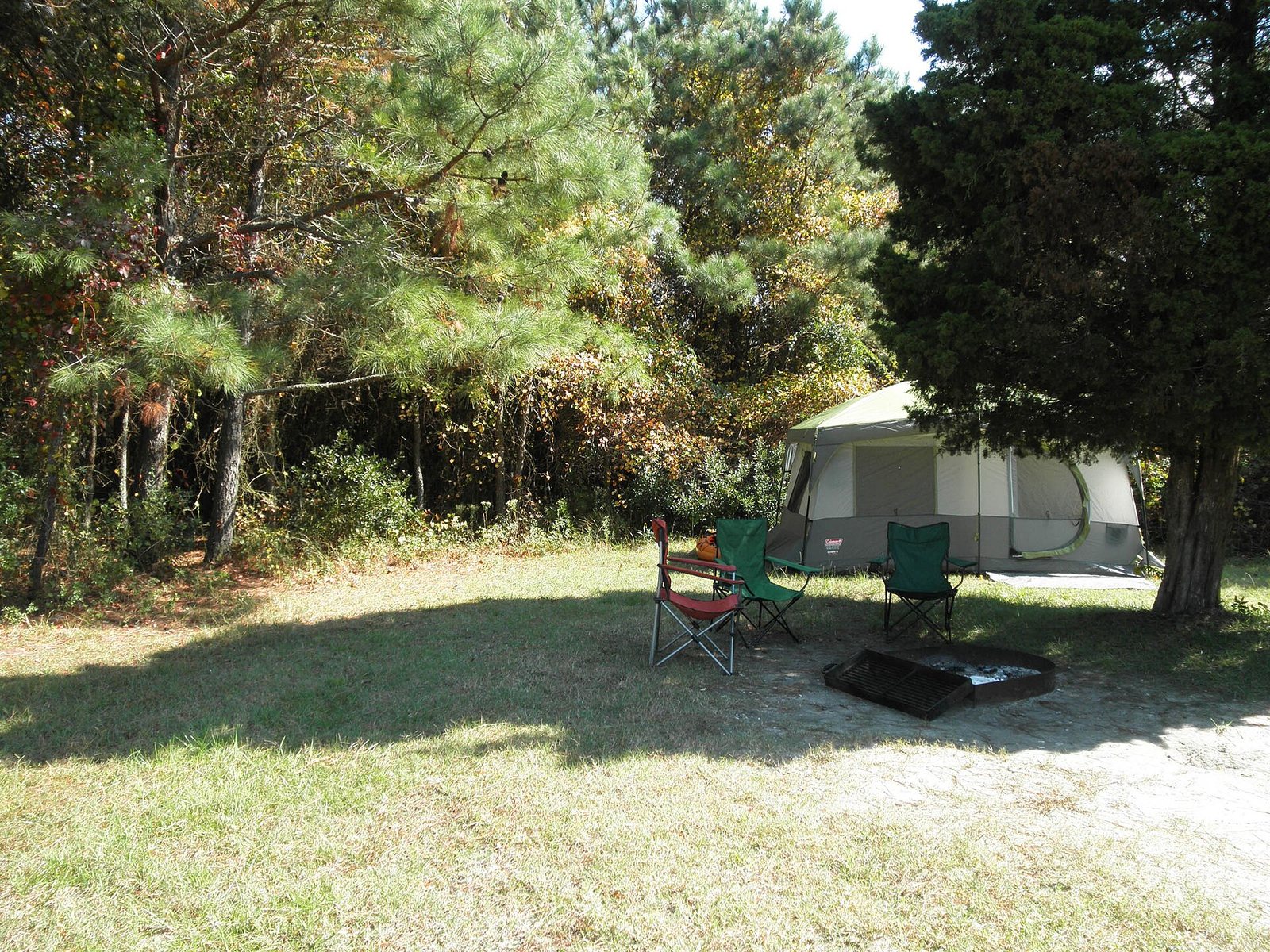
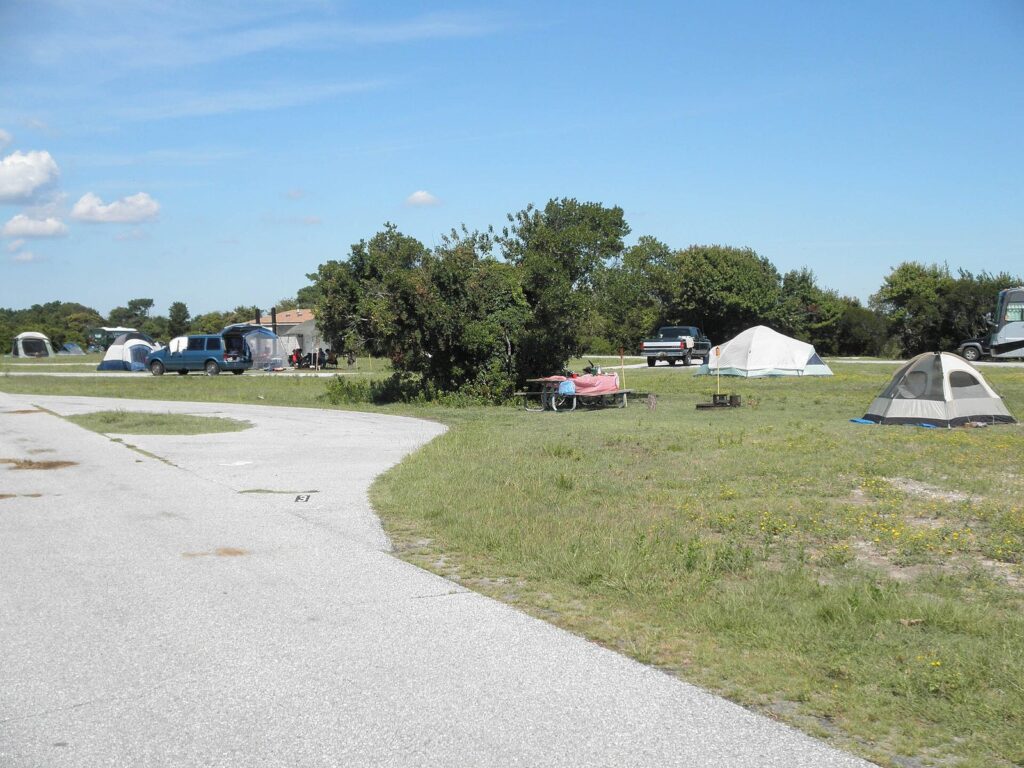
The only place in Maryland to camp by the ocean, on a barrier island where wild horses wander through the campground. The National Park Service runs Oceanside and Bayside loops ($40 a night) and the state runs its own campground at Assateague State Park ($27.50, or $38.50 with electric). It’s windy, sandy and buggy in summer, and hard to beat for anyone who wants to fall asleep to the sound of surf. Our Assateague Island guide covers the island itself; the camping details are below.
2. Janes Island State Park, Crisfield
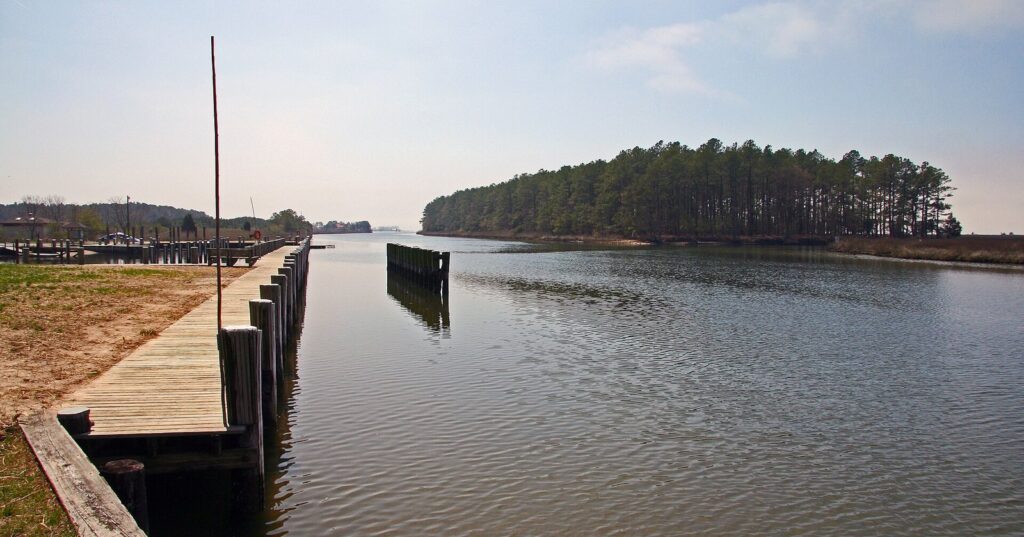
A campground on the edge of 2,900 acres of salt marsh with more than 30 miles of marked water trails leading to empty beaches you can only reach by kayak. Family campsites, camper cabins and full-service cabins sit near the water, and the sunsets over Tangier Sound are the best of any Maryland campground. Summer bugs are fierce; spring and fall are ideal.
3. Elk Neck State Park, North East
Beaches on the North East River, woods, bluffs and the walk to Turkey Point Lighthouse at the head of the Chesapeake Bay, with family campsites, camper cabins and cabins (Elk Neck’s cabins share a washhouse rather than having their own bathrooms). It’s the best big state park campground within easy reach of Philadelphia and Wilmington.
4. Deep Creek Lake State Park, Garrett County
Lakefront mountain camping with a swimming beach, a boat launch and the free Discovery Center, plus camper cabins and a yurt. Summer nights are cool at about 2,500 feet, and Wisp, Swallow Falls and the lake’s restaurants are all close.
5. Swallow Falls State Park, Garrett County
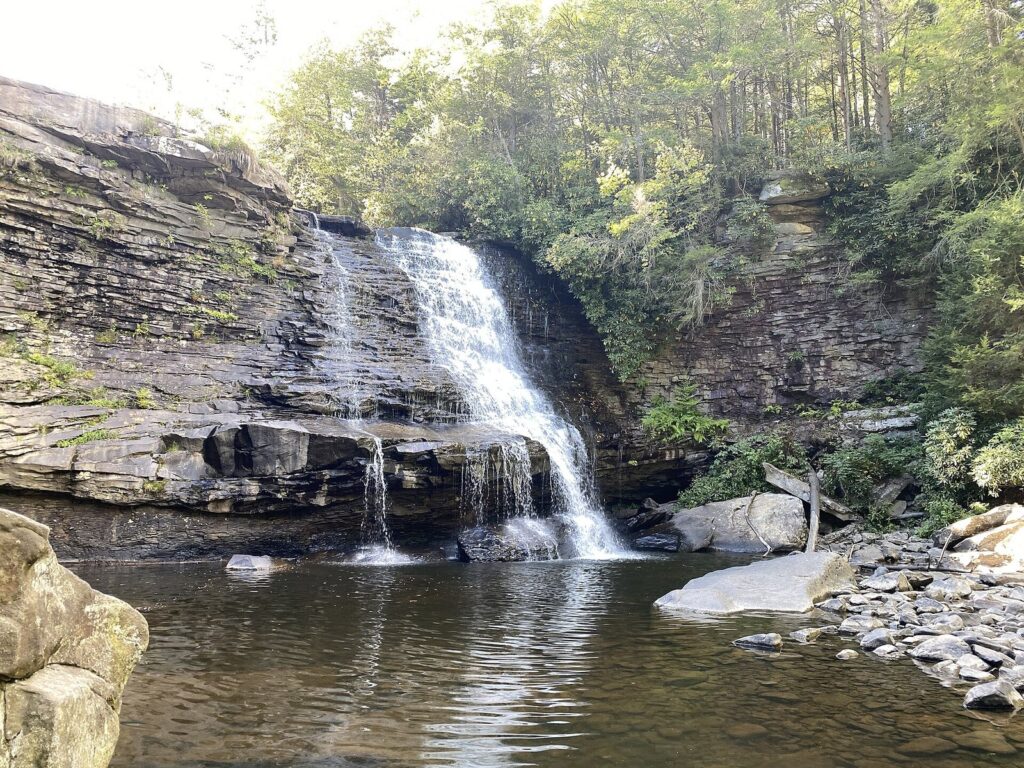
Camp under old hemlocks a short walk from Muddy Creek Falls, the highest free-falling waterfall in Maryland. Family campsites and camper cabins; the park’s main entrance road has been closed since March 9, 2026, for a bridge replacement, so check access before you book.
6. Cunningham Falls State Park, Thurmont
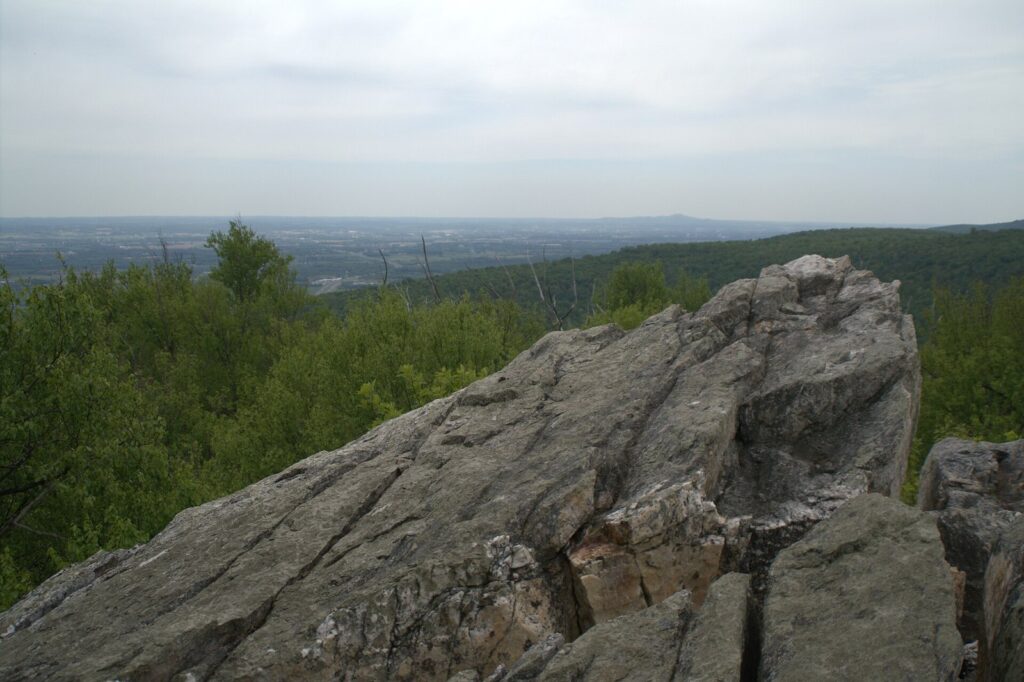
Two campgrounds (the Houck Area with camper cabins, near Hunting Creek Lake’s beaches and the falls, and the quieter Manor Area) on Catoctin Mountain, about 1¼ to 1½ hours from DC or Baltimore. It’s the easiest mountain camping for the cities, and Catoctin Mountain Park’s trails are next door.
7. Rocky Gap State Park, near Cumberland
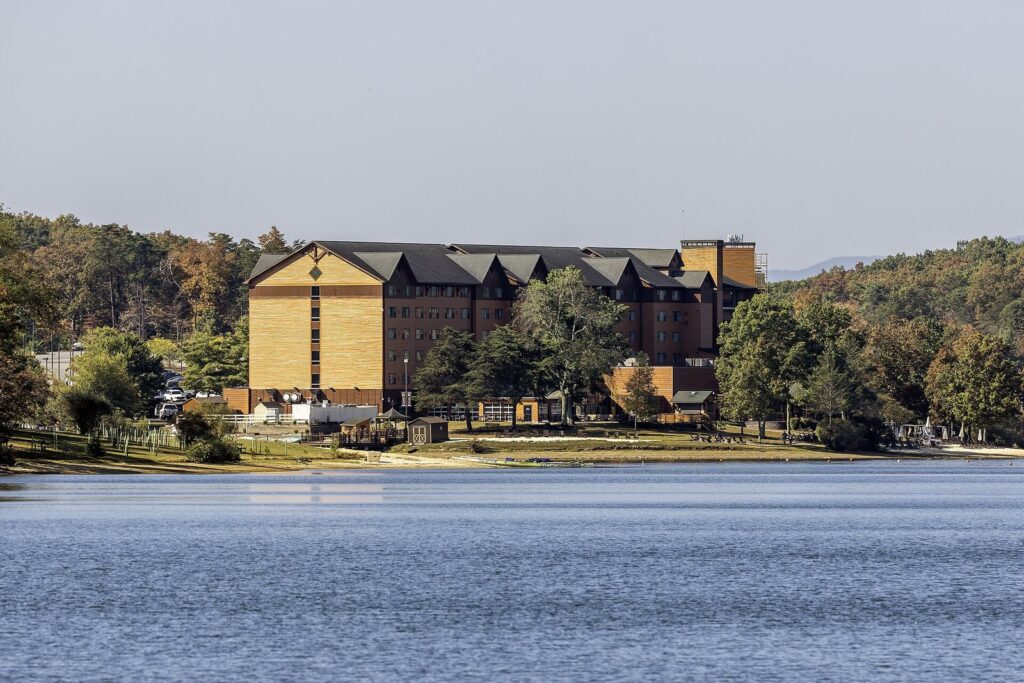
Family campsites, camper cabins, a chalet and a group site around 243-acre Lake Habeeb, with beaches, paddling and the casino resort across the water. It’s right off I-68, so it’s the easiest Western Maryland campground to reach.
8. Pocomoke River State Park, Snow Hill
Camping among loblolly pines beside a dark cypress river, at Shad Landing (with a marina and seasonal pool) or Milburn Landing across the river, both with camper cabins. Shad Landing has clearly marked pet and no-pet loops, which makes it one of the best campgrounds for dogs.
9. Greenbrier State Park, Boonsboro
A wooded campground on South Mountain beside a lake with a sandy beach, near the Appalachian Trail, Antietam and Washington Monument State Park. Busy on summer weekends, when day-use visitors need reservations too.
10. Susquehanna State Park, near Havre de Grace
A quiet wooded campground with camper cabins above the Susquehanna River, with river trails, a 1794 grist mill and winter eagle-watching at Conowingo Dam nearby. It’s about 45 minutes to an hour from Baltimore and 1¼ to 1½ hours from Philadelphia.
Maryland campgrounds compared
This table covers the main public campgrounds, what you can rent at each (per DNR’s and the Park Service’s own lists), how to book and when to go. Nightly prices vary by site and season; check the reservation site for the current rate.
| Campground | Region | What you can rent | Book through | Nightly cost (2026) | Best months |
|---|---|---|---|---|---|
| Assateague Island National Seashore | Ocean, Worcester County | Drive-in and walk-in tent sites, group and horse sites; no hookups | Recreation.gov, up to 6 months ahead | $40 ($80 group or horse) | May, June, September, October |
| Assateague State Park | Ocean, Worcester County | Family campsites, some electric | Maryland reservation site | $27.50; $38.50 electric | May, June, September, October |
| Janes Island State Park | Lower Eastern Shore | Campsites, camper cabins, cabins, a lodge sleeping 16 | Maryland reservation site | Check per site | April to June, September, October |
| Pocomoke River State Park | Lower Eastern Shore | Campsites and camper cabins at two areas | Maryland reservation site | Check per site | April to June, September, October |
| Tuckahoe and Martinak state parks | Upper and Mid-Shore | Campsites, camper cabins (Martinak also a cabin) | Maryland reservation site | Check per site | April to October |
| Elk Neck State Park | Cecil County | Campsites, camper cabins, cabins | Maryland reservation site | Check per site | May to October |
| Susquehanna State Park | Harford County | Campsites, camper cabins | Maryland reservation site | Check per site | April to October |
| Patapsco Valley (Hollofield, Hilton) | Baltimore area | Campsites; camper cabins at Hilton | Maryland reservation site | Check per site | April to October |
| Point Lookout and Smallwood | Southern Maryland | Campsites (camper cabins at Smallwood) | Maryland reservation site | Check per site | May, June, September, October |
| Greenbelt Park (NPS) | DC suburbs | Wooded campsites | Recreation.gov | About $20 | April to June, September to November |
| Cunningham Falls and Gambrill | Frederick County | Campsites, camper cabins | Maryland reservation site | Check per site | May to October |
| Owens Creek, Catoctin Mountain Park (NPS) | Frederick County | Campsites | Recreation.gov | About $30 | Late April to October |
| Greenbrier and Fort Frederick | Washington County | Campsites | Maryland reservation site | Check per site | May to October |
| C&O Canal drive-in sites | Along the Potomac | Drive-in and walk-in sites | Advance reservations required | Fee charged | April to October |
| C&O Canal hiker-biker sites | Along the towpath | Primitive sites for trail users | First come, first served | Free | April to October |
| Rocky Gap State Park | Allegany County | Campsites, camper cabins, chalet, group site | Maryland reservation site | Check per site | May to October |
| Deep Creek Lake, Swallow Falls, New Germany | Garrett County | Campsites, camper cabins, a yurt (Deep Creek), cabins (New Germany) | Maryland reservation site | Check per site | June to October |
| Green Ridge, Savage River, Big Run | Western Maryland forests | Primitive sites | Green Ridge first come; Savage River and Big Run reservable | Check with the forest | May to October |
For hookups, many developed state park campgrounds have electric sites and some have water and sewer too; filter by site type on the reservation site. The national seashore at Assateague has no hookups at all.
How do you reserve camping in Maryland?
Maryland’s state parks share one system, run through parkreservations.maryland.gov and a call center at 1-888-432-2267 (weekdays 9 a.m. to 5 p.m.; 301-687-8160 from outside the US). DNR upgraded the online system ahead of the 2026 camping season. The rules that matter:
- Booking window: up to 12 months before your arrival date.
- Release time: new dates become available Monday through Friday at 9 a.m., online and by phone. Nothing new releases on weekends or on Thanksgiving, Christmas, New Year’s Eve or New Year’s Day; those dates release on the next business day. For a popular summer weekend, be online at 9 a.m. exactly a year out.
- Summer minimums: from Memorial Day weekend through Labor Day, a two-night minimum (Thursday and Friday, Friday and Saturday, or Saturday and Sunday nights) and three nights over holiday weekends. Saturday arrivals and departures aren’t allowed in that period unless you book seven nights or more.
- Stay limit: 14 nights in any 21 days, after which you must leave state park campgrounds for a week.
- Payment: Visa or MasterCard at the time of booking, plus a transaction fee (reported at $4.75).
- Same-day and walk-in: some parks take same-day bookings until 5 p.m., and walk-in campers can claim any site that isn’t reserved.
- Discounts: the Golden Age Pass (62 and older, $10 lifetime) halves the fee for one campsite or camper cabin from Sunday through Thursday, holidays excluded.
Federal campgrounds use Recreation.gov instead. Assateague’s national seashore sites open up to six months ahead, and reservations are required from March 15 to November 15. Greenbelt Park and Catoctin’s Owens Creek book there too, and the C&O Canal’s drive-in campgrounds now require advance reservations as well.
What a state park campsite includes
A standard family campsite comes with a picnic table and, in most cases, a fire ring, with a central bathhouse nearby that has hot and cold running water and flush toilets. Electric sites add a power hookup, so bring a proper outdoor-rated cord; water and sewer hookups are less common. Camper cabins add beds and a grill but no bathroom, and full-service cabins add a bathroom, kitchen and fireplace. Nothing includes firewood except full-service cabins in winter, and nothing includes bedding.
How to get a site when everything looks sold out
- Check back for cancellations. Plans change, and released sites reappear on the reservation site; look early in the week before your trip.
- Go midweek or in the shoulder season. A Sunday-to-Thursday stay in June or September is far easier to book than any summer weekend, and seniors with the Golden Age Pass pay half on those nights.
- Try the quieter parks. Martinak, Tuckahoe, Smallwood, Cedarville State Forest, Gambrill and Fort Frederick rarely fill the way Assateague, Janes Island and Deep Creek do.
- Use same-day booking. Some parks take same-day reservations until 5 p.m., and walk-in campers can claim any unreserved site.
- Go primitive. Green Ridge State Forest’s sites and the C&O Canal’s hiker-biker sites are first come, first served.
Camping at Assateague: national seashore vs state park
Assateague Island has two separate campground systems a few miles apart, and people mix them up constantly. Both put you on the island with the wild horses; they differ in price, booking and comfort.
| Assateague Island National Seashore (NPS) | Assateague State Park (Maryland) | |
|---|---|---|
| Where | South of the state park, on the Oceanside and Bayside loops | At the island’s north end, just past the bridge |
| Price (2026) | $40 a night; $80 group and horse sites | $27.50 a night; $38.50 with electric |
| Book on | Recreation.gov, up to 6 months ahead | parkreservations.maryland.gov, up to 12 months ahead |
| Season | Bayside open year-round; Oceanside reservations required March 15 to November 15 | Check the camping season on the reservation site |
| Facilities | Chemical toilets, drinking water, cold showers mid-March to mid-November; no hookups | Bathhouses with showers (a dozen new ones for summer 2026); some electric sites; a nature center between the D and E loops |
| Best for | Oceanfront tent camping, walk-in sites, horse camping in the off-season | Families who want hot showers and electric hookups |
A few details at the national seashore: the Oceanside walk-in tent sites sit 100 to 200 feet from parking, over the dune from the surf; the Bayside B loop is generator-free; group sites take 7 to 25 campers; and two horse sites open from October 16 to April 14 for up to six people and six horses. From November 16 to March 14, Oceanside Loop 1 closes and Loop 2 is first come, first served, while Bayside stays reservable.
Camping on Assateague, practically: bring long sand stakes, a screen shelter and serious bug spray from June to September, and expect wind. Lock all food and trash in your car; the horses will open coolers and they bite. Pets have strict limits, especially on the national seashore’s beaches and trails. Entrance fees apply on top of camping at the national seashore ($25 per vehicle for seven days). See our guide to Assateague Island National Seashore for the horses, beaches and the Virginia end of the island.
Mountain camping in Western Maryland
The mountains are where Maryland camping feels most like camping: cool nights, hemlock and hardwood forest, lakes and waterfalls. Garrett County’s campgrounds sit around 2,500 feet, so pack warm layers even in summer.
- Deep Creek Lake State Park: family campsites, camper cabins, a yurt and the Bear Den campsite, with the lake beach and boat launch.
- Swallow Falls State Park: campsites and camper cabins under old-growth hemlocks near Muddy Creek Falls (check the entrance road).
- New Germany State Park: family campsites and full-service cabins by a small lake, with cross-country ski trails in winter.
- Herrington Manor State Park: cabins only, around a lake with a beach.
- Rocky Gap State Park: campsites, camper cabins, a chalet and a group site on Lake Habeeb.
- Big Run State Park and Savage River State Forest: primitive sites you reserve ahead.
- Green Ridge State Forest: primitive sites, first come, first served, with self-registration at the forest office.
- Cunningham Falls, Gambrill and Greenbrier state parks and Catoctin’s Owens Creek Campground (NPS, about $30, open roughly late April through October) cover the Catoctin and South Mountain ridges closer to the cities.
Black bears live in Garrett and Allegany counties: store food and coolers in your car or a hard-sided camper, never in the tent, and pack out trash. Summer weekends at Deep Creek and Swallow Falls fill early, and October foliage weekends fill even faster.
Bay, river and beach camping
Maryland’s only ocean camping is on Assateague, but the Chesapeake and its rivers have some of the state’s most relaxing campgrounds:
- Janes Island: the marsh and water-trail campground near Crisfield. Its full-service cabins require 7- or 14-night Saturday-to-Saturday stays from the second Saturday in June to the Saturday before Labor Day weekend, so plan early or come in spring or fall. The Daugherty Creek Lodge sleeps 16 for group trips.
- Elk Neck: river beaches and a lighthouse walk at the top of the Bay.
- Point Lookout: family campsites at the tip of Southern Maryland, where the Potomac meets the Bay, with a fishing pier and beach.
- Smallwood: campsites and camper cabins on Mattawoman Creek in Charles County, with a marina for paddlers and anglers.
- Tuckahoe and Martinak: quiet Eastern Shore campgrounds on a lake and creek (Tuckahoe) and the Choptank River (Martinak).
- Pocomoke River: cypress swamp paddling from Shad Landing or Milburn Landing.
- Hart-Miller Island: boat-in only campsites off eastern Baltimore County, first come, first served; you need your own boat.
Camping near DC and Baltimore
You don’t have to drive to the mountains or the ocean for a night in a tent.
- Greenbelt Park (NPS): a wooded campground in Greenbelt, next to College Park and the Baltimore-Washington Parkway, reported at about $20 a night and booked on Recreation.gov. It’s one of the closest public campgrounds to downtown Washington.
- Cherry Hill Park, College Park: a big private campground with RV and tent sites, log cabins, cottages, yurts and glamping pods, plus mini golf, a hot tub and a cafe.
- Patapsco Valley State Park: Hollofield and Hilton areas, about 20 minutes from downtown Baltimore; Hilton has camper cabins.
- Susquehanna and Elk Neck state parks: 45 minutes to an hour or so northeast of Baltimore.
- Smallwood State Park and Cedarville State Forest: the closest state campgrounds to southern Prince George’s and Charles counties.
- Cunningham Falls and Greenbrier state parks: mountain camping about 1¼ to 1½ hours from either city.
- C&O Canal campgrounds: drive-in sites (reservations required) and free hiker-biker sites along the Potomac, some within an hour of DC.
- Ramblin’ Pines, Woodbine: a private campground between Baltimore, Frederick and Washington.
Primitive and backcountry camping
Maryland isn’t big on true wilderness, but there are good options for campers who want fewer neighbors:
- State forest primitive sites: Green Ridge State Forest’s sites are first come, first served, with self-registration at the forest office; Savage River State Forest, Big Run State Park and Pocomoke State Forest take advance reservations. From Memorial Day through Labor Day, weekend stays require two nights and holiday weekends three.
- C&O Canal hiker-biker sites: free, primitive sites spaced along the 184.5-mile towpath for people traveling on foot or by bike, first come, first served. They’re the backbone of the classic Washington-to-Pittsburgh bike trip.
- The Appalachian Trail: about 40 miles cross Maryland along South Mountain, and camping on the Maryland section is limited to the designated shelters and campsites.
- Assateague’s walk-in sites: not backcountry, but a short haul over the dune puts you away from cars.
Cabins, yurts and glamping
If sleeping on the ground isn’t the point, Maryland’s parks have a middle ground. Camper cabins are small, rustic rooms that sleep four to six (usually a double bed and bunked twins, with a futon or more bunks in the six-person version), with a grill outside and restrooms nearby; bring bedding. Full-service cabins, about 50 of them statewide, mostly have electricity, a bathroom with a shower, a fireplace and a kitchen with basic dishes and pots; you bring linens and blankets, and firewood is provided in winter. Full-service cabins have a two-night minimum year-round and three nights over holiday weekends, except at Janes Island, where summer stays run a week or two. Our Maryland state parks guide lists the parks with cabins, and the classics are Herrington Manor, New Germany, Janes Island and Elk Neck.
A few one-off stays are worth knowing: the Mill Pond Cottage in Gunpowder Falls State Park’s Hereford area ($200 a night, two-night minimum, booked through the park office), the Daugherty Creek Lodge at Janes Island, the yurt at Deep Creek Lake State Park and the chalet at Rocky Gap.
For glamping, the private resorts lead: Cherry Hill Park near College Park has yurts and glamping pods; Sun Outdoors Frontier Town, the Wild West-themed resort on Sinepuxent Bay near Ocean City, has glamping and cabins; Jellystone Park Williamsport has cottages, cabins and a water park; and Maple Tree Campground rents treehouses near the Appalachian Trail. The Maryland Association of Campgrounds (mdcamping.com) lists the rest.
Private campgrounds and RV resorts
Private campgrounds fill the gaps the state doesn’t: full hookups, pools, planned activities and cabins with more comforts, usually at higher prices and with less nature. The ones worth knowing:
- Cherry Hill Park, College Park: the big campground for visiting Washington, with RV and tent sites, cabins, cottages, yurts and glamping pods.
- Sun Outdoors Frontier Town, Berlin: a Wild West-themed resort on Sinepuxent Bay a few minutes from Ocean City, with RV and tent sites, cabins and glamping.
- Jellystone Park Williamsport: a family resort in Washington County with a water park, cabins and cottages, close to I-70 and I-81.
- Ramblin’ Pines, Woodbine: a central campground between Baltimore, Frederick and Washington.
- Bay Shore Campground, Rock Hall: Chesapeake waterfront camping on the Upper Eastern Shore.
- Maple Tree Campground: treehouses and tent sites near the Appalachian Trail on South Mountain.
The Maryland Association of Campgrounds (mdcamping.com) keeps a directory of the rest. If you’re camping to be near Ocean City’s beach and Boardwalk, Frontier Town and the two Assateague campgrounds are the closest options; our Ocean City guide covers the resort itself.
RV camping in Maryland
- State parks: many developed campgrounds have electric sites and some have water and sewer; filter by site type and check length limits when you book. DNR has a generator policy, so check quiet hours before running one.
- Assateague National Seashore: RVs fit the Oceanside and Bayside drive-in loops, but there are no hookups, and Bayside B is generator-free.
- Private resorts: Cherry Hill Park near DC, Sun Outdoors Frontier Town near Ocean City and Jellystone Park Williamsport are the big full-service RV options.
- Baltimore’s tunnels: vehicles carrying propane cylinders over 10 pounds can’t use the Fort McHenry or Harbor tunnels, and with the Key Bridge gone, hazardous-materials routing now detours around the western half of the I-695 Beltway. Plan RV routes accordingly.
- The Bay Bridge: tolls are cashless and eastbound only ($2.50 with a Maryland E-ZPass for a two-axle vehicle; more for more axles), and summer weekend backups are brutal; cross early or late.
Two sample camping trips
A first camping weekend near the cities
- Friday: leave DC or Baltimore after work and reach Cunningham Falls State Park’s Houck Area in about 1¼ to 1½ hours. Pitch the tent or pick up the camper cabin key, and buy firewood at the park.
- Saturday: walk the short trail to the 78-foot falls in the morning, swim at Hunting Creek Lake in the afternoon, and drive 20 minutes to Frederick or Thurmont for dinner if you don’t want to cook.
- Sunday: hike to the overlooks in Catoctin Mountain Park next door, then pack up; with a two-night booking you’ve met the summer minimum without a Saturday arrival.
Three nights on Assateague
- Day 1: cross the Bay Bridge before 7 a.m. on a Saturday or come through Delaware, check in at the national seashore or the state park, and set up with sand stakes and a screen shelter.
- Day 2: beach day in front of the lifeguards, a bike ride on the island’s paved path, and the horses at dusk (from at least 40 feet away).
- Day 3: paddle the calm bay side, walk the short nature trails, or drive 20 minutes to Berlin for lunch; stargaze from the dunes at night.
- Day 4: pack up early and head home, crossing the Bay Bridge westbound before 11 a.m. on a Sunday.
Camping with kids, groups, boats and fishing rods
Camping with kids
Maryland’s state parks are built for family camping: most campgrounds have bathhouses with hot showers, playgrounds are common, and many parks run summer naturalist programs. For a first trip with young children, a camper cabin takes the pressure off (a real bed, a door that locks and a grill outside), and a park with a beach or lake keeps everyone busy. Deep Creek Lake State Park’s free Discovery Center, Cunningham Falls’ lake beaches, Elk Neck’s river beaches and Assateague’s horses are the easy wins, and the national seashore runs seasonal ranger programs. Book a site near the bathhouse; you’ll thank yourself at 2 a.m.
Group and youth camping
Many state parks set aside youth group campsites for scouts, schools and clubs, booked through the reservation service, and a Maryland Park Service Youth Group Pass (valid two years) covers day-use entry outside summer weekends and camping in designated youth group areas when sites are free. Family groups can book the group sites at Rocky Gap and Pocomoke River’s Milburn Landing, the national seashore’s group sites at Assateague (7 to 25 campers, $80 a night), or a whole building: the Daugherty Creek Lodge at Janes Island sleeps 16, and the Wye Island conference lodge near Queenstown sleeps 12 in a bunkhouse setting.
Paddle-in and boat camping
Maryland’s water is its best trail. Hart-Miller Island, off eastern Baltimore County, has first-come campsites you can reach only by boat. Janes Island’s 30-plus miles of marked water trails start from the campground, so you can paddle to isolated beaches by day and sleep in a campsite or cabin. And the Potomac beside the C&O Canal has hiker-biker sites along the towpath that paddlers use too; know the river’s levels and rapids before you launch, and never paddle near Great Falls.
Fishing and crabbing at camp
Many campgrounds sit on fishable water, from trout streams in Garrett County to the Bay at Point Lookout and Janes Island. In tidal water, adults need a Chesapeake Bay and Coastal Sport Fishing License ($15 a year for residents and $22.50 for non-residents in 2026, or $6 and $12 for seven days), or a free registration if they’re exempt; freshwater fishing needs a separate nontidal license. Recreational crabbing in the Bay runs April 1 to December 15; without a license you can keep two dozen male hard crabs, females can’t be kept in the Bay, and the minimum size for males is 5 inches through July 14 and 5¼ inches after.
Accessible camping
Many state park campgrounds have accessible sites and bathhouses, and DNR’s Access for All program covers accessible features across the parks. The free Universal Disability Pass covers day-use entry for the holder and a companion. Facilities differ a lot from park to park, so call the park or the reservation service before booking and ask about site surfaces, bathhouse distance and cabin access.
Rules: firewood, pets, quiet hours and alcohol
- Firewood: DNR bans bringing your own firewood onto any state park, forest or wildlife area, to stop the spread of the emerald ash borer and other pests. Buy it at the park or from a vendor near the campground. Details are on DNR’s firewood policy page.
- Pets: allowed at many state park campgrounds, often only in designated pet loops (Shad Landing at Pocomoke River marks them clearly), and some camper cabins and cabins are pet-friendly. Pets must be leashed, licensed and vaccinated. Assateague’s national seashore has much tighter limits on the beach and trails.
- Quiet hours: 10 p.m. to 7 a.m. in state park campgrounds, and barking dogs count as noise.
- Alcohol: not allowed in camper cabins, allowed inside full-service cabins and motor homes, and open containers are banned on park roads, parking lots and trails.
- Stay limits: 14 nights in any 21 days in state parks.
Camp etiquette
Pack out everything you bring, including food scraps, which draw raccoons, foxes and, in the west, bears. Keep to your own site and the marked paths, especially in the dunes at Assateague, where walking on the vegetation damages the island. Give wildlife room: at least 40 feet for the horses, and never feed anything. Keep music low, generators within the rules, and fires small and attended, and drown them completely before bed.
When does camping open in Maryland? Seasons, bugs, heat and storms
Most state park campgrounds run from spring through fall, and not all are open year-round, so check the park before a winter trip; the national seashore’s Bayside loop stays open all year. Booking season for summer weekends is really January to April, when the 12-month window for next summer is already running and the best sites go.
- Spring (April and May): cool nights, no bugs to speak of and waterfalls at their fullest; the best time for Eastern Shore and Assateague camping.
- Summer (June to August): hot and humid, with average July highs near 89°F around Baltimore. Mosquitoes, greenheads and deer flies are fierce on the Shore and at Assateague, and afternoon thunderstorms are common; the mountains are the escape.
- Fall (September and October): the best camping season overall: warm days, cool nights, fewer bugs and fall color in the west by mid-October.
- Winter: cabin season. A few campgrounds stay open, but most campers switch to full-service cabins, which come with firewood in winter.
Storms: Atlantic hurricane season runs June 1 to November 30, and barrier-island and marsh campgrounds are the first to close for a storm; watch the forecast and the park’s alerts. Ticks are a year-round concern in the woods, so check everyone after a hike, and on the Bay, stinging sea nettles are common in the water in July and August.
A Maryland camping packing list
- Long sand stakes and a screen shelter for Assateague and the Eastern Shore.
- Bug spray with a real repellent, long sleeves for dusk, and a tick-check habit.
- A rain fly and a tarp; summer storms arrive fast.
- Layers and a warm sleeping bag for Garrett County, even in August.
- A cooler you can lock in the car, for horses at Assateague and bears in the west.
- Bedding and cookware for camper cabins; linens for full-service cabins.
- A card for firewood and supplies, and a printed or saved copy of your reservation, since signal is weak in the mountains and marsh.
What to skip
Skip July at Assateague if you hate bugs. Go in May, June or September instead, when the water is still warm and the flies are fewer.
Skip bringing firewood from home. It’s banned on state land; buy it at the park.
Skip a Saturday arrival in summer. State parks won’t take one unless you book a week.
Skip booking at the last minute for a holiday weekend in summer. Those sites went a year ago; try a weekday or a less famous park.
Don’t assume Assateague is one campground. The national seashore and the state park book on different websites with different rules.
Frequently asked questions
How do you reserve camping in Maryland?
For state parks and forests, book at parkreservations.maryland.gov or call 1-888-432-2267, up to 12 months before arrival; new dates release weekdays at 9 a.m. For Assateague Island National Seashore, Greenbelt Park and Catoctin’s Owens Creek, use Recreation.gov; Assateague opens six months ahead. C&O Canal hiker-biker sites are first come, first served.
How much does camping in Maryland cost?
State park campsites run roughly $20 to $55 a night depending on hookups, season and park, plus a transaction fee. In 2026, Assateague State Park charged $27.50 ($38.50 with electric), the national seashore $40, Catoctin’s Owens Creek about $30 and Greenbelt Park about $20; check Recreation.gov for current rates. C&O Canal hiker-biker sites are free, and seniors 62 and up can halve state park camping costs Sunday to Thursday.
When does camping open in Maryland?
Most state park campgrounds open in spring and close in late fall, and not all stay open year-round, so check each park. Summer rules, including two-night minimums, run from Memorial Day weekend through Labor Day. At Assateague’s national seashore, Bayside is open all year and Oceanside requires reservations from March 15 to November 15. Catoctin’s Owens Creek runs roughly late April through October.
Are pets allowed when camping in Maryland?
Often, but not everywhere. Many state park campgrounds allow leashed, vaccinated pets in designated pet loops, and some camper cabins and cabins are pet-friendly; book a site marked for pets. Quiet hours of 10 p.m. to 7 a.m. include barking. Assateague’s national seashore restricts pets on its beaches and trails, so read its rules before you bring a dog.
Can you camp on the beach in Maryland?
Only on Assateague Island, and only in the campgrounds. The national seashore’s Oceanside loop and walk-in sites sit just behind the dunes, and Assateague State Park’s campground is a short walk from its guarded beach. Ocean City has no beach camping, and the Chesapeake Bay’s beach campgrounds, such as Elk Neck and Point Lookout, are in state parks.
Where can you camp for free in Maryland?
The C&O Canal’s hiker-biker campsites along the towpath are free for people traveling on foot or by bike, first come, first served. Other public campgrounds charge, though state forest primitive sites are the simplest option, and the Golden Age Pass cuts state park camping in half for seniors from Sunday through Thursday.
Do Maryland state parks have cabins?
Yes. There are two kinds: camper cabins, rustic rooms that sleep four to six with beds and bunks but no bathroom, and about 50 full-service cabins with electricity, a bathroom, a fireplace and a kitchen. Herrington Manor, New Germany, Janes Island and Elk Neck are the best known; Elk Neck’s cabins share a washhouse. Most have two-night minimums, and Janes Island’s run a week or two in summer.
Can you have a campfire when camping in Maryland?
At most state park campsites, yes: sites usually have a fire ring, and full-service cabins have fireplaces. You must use firewood bought at the park or nearby, since bringing your own onto state land is banned to stop the emerald ash borer. In dry spells, check the park’s alerts for burn restrictions, and never leave a fire unattended.
Related Maryland guides
- Maryland state parks: fees, reservations and cabins
- Assateague Island: horses, beaches and the national seashore
Sources and verification
Everything on this page was checked on September 23, 2026 against the organizations listed below, and the guide is compiled from their published information rather than from first-hand visits.
- Maryland DNR: Camping and Cabins
- Maryland State Park reservations
- National Park Service: camping at Assateague Island National Seashore
- Recreation.gov
- NPS: Owens Creek Campground, Catoctin Mountain Park
- NPS: Greenbelt Park campground
- Maryland DNR: firewood policy
Also consulted: the C&O Canal Trust and the Park Service’s C&O Canal pages, DNR’s pet and alcohol policies, the Maryland Association of Campgrounds, Cherry Hill Park, Sun Outdoors, Jellystone Park Williamsport, Maple Tree Campground, the Maryland Transportation Authority and the National Weather Service.
Maryland Tourism Guide is an independent publication. It is not affiliated with Visit Maryland or any agency or business named here, and no one paid to be included.
Photo credits
- Bayside campsite, Assateague Island National Seashore (featured image): photo by NPS photo, Wikimedia Commons (public domain)
- Bayside campground, Assateague Island National Seashore: photo by NPS photo, Wikimedia Commons (public domain)
- Muddy Creek Falls, Swallow Falls State Park: photo by TheTurducken, Wikimedia Commons (CC BY 2.0)
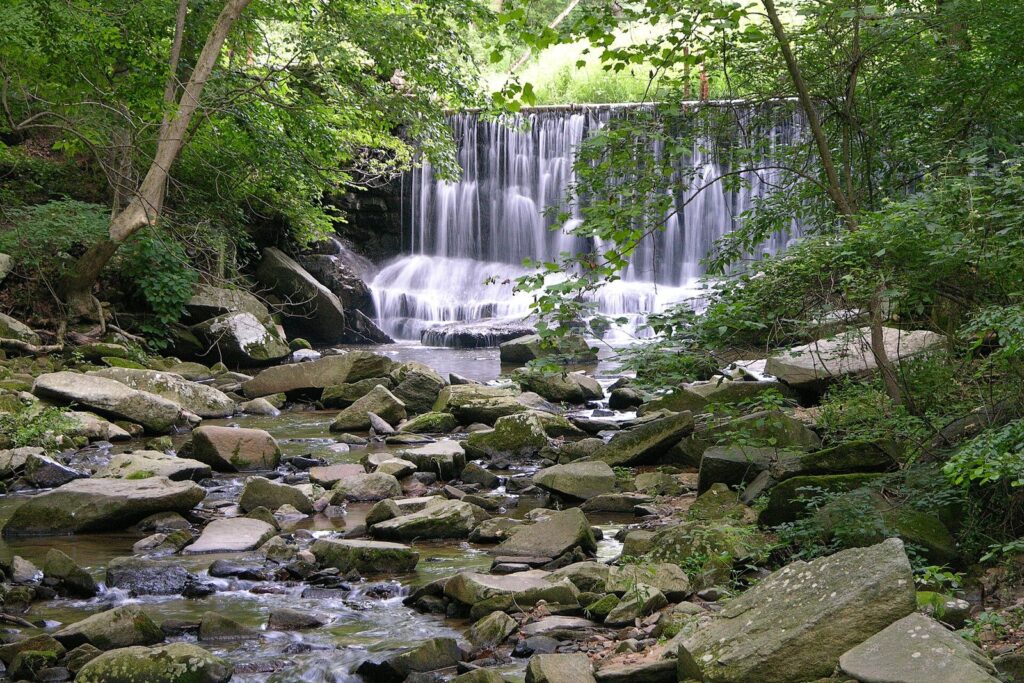
- Susquehanna State Park: photo by Photo by and (c)2006 Derek Ramsey (Ram-Man), Wikimedia Commons (CC BY-SA 2.5)
- Lake Habeeb, Rocky Gap State Park: photo by Acroterion, Wikimedia Commons (CC BY-SA 4.0)
- Bob's Hill Overlook, Cunningham Falls State Park: photo by Aneta Kaluzna, Wikimedia Commons (public domain)
- Janes Island State Park: photo by Acroterion, Wikimedia Commons (CC BY-SA 4.0)